
Soups & Stews
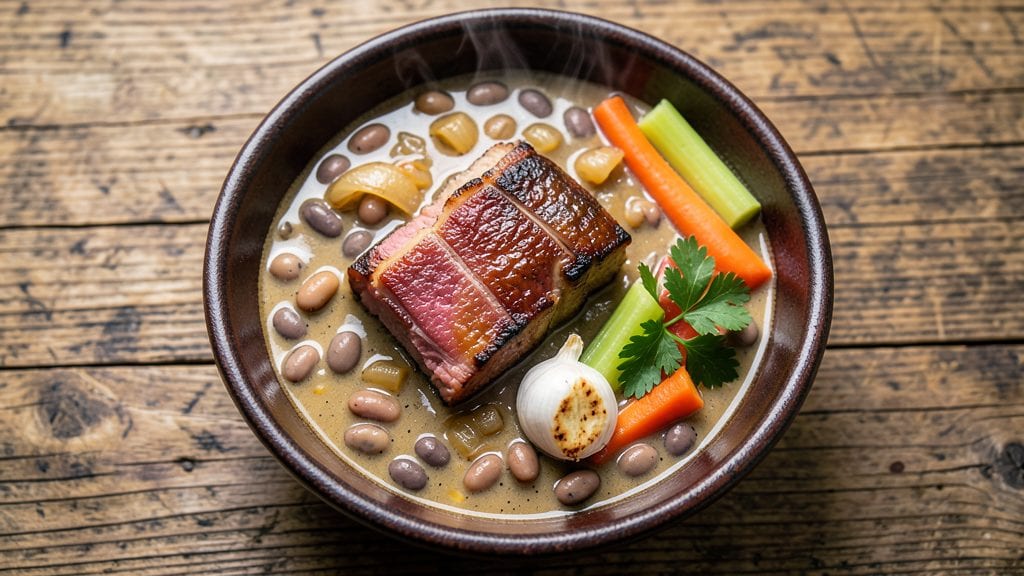
This ham hock and navy bean soup recipe delivers the kind of deep, slow-simmered comfort that transforms a simple weeknight into a memorable meal. The secret lies in letting the ham hock and beans meld together over hours, creating a broth so rich it practically dissolves on your tongue. I first made this during a chilly November evening when I needed something hearty enough to warm both body and soul—and it’s been my go-to ever since.
The beauty of this soup is its simplicity paired with profound flavor. You’ll start with navy beans soaked overnight for perfect texture, then build layers of savory depth from the ham hock, aromatic vegetables, and herbs.
The slow simmering process—about 4 hours—allows the ham to break down into tender, flavorful pieces while the beans absorb the broth’s richness. Every spoonful becomes a balance of protein, vegetables, and broth, making it a complete, satisfying meal in one pot.
What you’ll end up with is a soup that’s velvety yet substantial, with tender ham that falls apart at the touch of a spoon and navy beans that hold their shape just enough to add satisfying bite.
The aroma alone—smoky, herby, and deeply savory—will have everyone gathered around the table. This isn’t just soup; it’s a flavor-packed hug in a bowl, perfect for cold days or when you crave something that feels like home.
Serve it with crusty bread to soak up every last drop of that rich broth, or pair it with a simple green salad for balance. The leftovers reheat beautifully, making it an ideal make-ahead dish for busy weeks.
Here’s how to make it—step by step—for a soup that tastes like comfort itself.
Ingredients for ham hock and navy bean soup
Pantry staples plus one special ingredient—ham hock—that turns simple beans into soul-warming perfection.
| Ingredient | Amount | Notes |
|---|---|---|
| Ham Hock 🍖 | 1 lb | Smoked or unsmoked, uncooked |
| Navy Beans 🥣 | 1 ½ cups | Dried, soaked overnight |
| Onion 🧅 | 1 whole | Yellow, chopped |
| Carrots 🥕 | 3 medium | Peeled, chopped into chunks |
| Celery Stalks 🌿 | 3 whole | Chopped, with leaves |
| Garlic Cloves 🧄 | 4 cloves | Peeled, minced |
| Tomato Paste 🍅 | 2 tbsp | Smooth, no sugar added |
| Bay Leaves 🌿 | 2 whole | Dried, standard size |
| Thyme Sprigs 🌿 | 4 whole | Fresh, or 1 tsp dried |
| Black Peppercorns 🌶️ | 1 tsp | Coarsely crushed |
| Salt 🧂 | 1 ½ tsp | Kosher or sea salt |
| Water 💧 | 8 cups | Filtered or tap |
| Olive Oil 🫒 | 2 tbsp | Extra-virgin for richness |
The ham hock is non-negotiable here. Look for smoked or unsmoked at your butcher—Whole Foods or local markets often carry better quality than supermarkets. A 1-pound hock is perfect for this batch, but if you find a larger one, just double the recipe. The dried navy beans? Bob’s Red Mill or Trader Joe’s have great bulk bins. Soak them overnight in plenty of water—they’ll triple in size. Don’t skip this step, or your soup will turn out mushy. The carrots can be baby carrots if you're in a hurry, but whole carrots give you more control over size.
No ham hock? Smoked turkey neck or chicken feet work in a pinch—they’ll give you that same deep, savory flavor. Short on thyme? Dried oregano at half the amount works, but fresh thyme is ideal. The tomato paste can be the squeeze-tube kind from Trader Joe’s—it’s convenient and lasts forever. For the celery, stems only if you want to avoid stringiness. The olive oil matters here—use something you’d drizzle on bread, not the cheap stuff. And if you’re worried about salt, start with half the amount and taste as you go—the broth will concentrate as it simmers.
This soup tastes even better the next day—trust me on that. Store leftovers in the fridge for up to 5 days, or freeze for 3 months. I always make a double batch because it reheats so well. For serving, crusty bread is a must—it soaks up that rich broth like a dream. If you’re prepping ahead, you can even freeze the ham hock and soaked beans together—they’ll keep for 6 months in a sealed bag. Just add water when you’re ready to cook.
Why You'll Love This Recipe
- One-Pot Wonder: Honestly, I swear by this for lazy nights—the ham hock simmers all day (or overnight) while you’re out, then you just toss in chopped veggies and beans. No extra pots, no fuss, just boom—done.
- Salted Depth Bomb: That ham hock? It’s the star. The slow simmer pulls all the collagen into the broth, turning it into this rich, salty-sweet base that makes the navy beans taste like they’ve been kissed by a chef. (Yes, even on a Tuesday night.)
- Meal Prep MVP: Between us, this soup only gets better the next day. I make a big batch on Sunday, and by Wednesday, it’s that soup—thickened just right, flavors melded, and still hearty enough to feed the whole family. No sad leftovers here.
- Budget Game-Changer: Navy beans and ham hock stretch into four full servings for pennies. I’ll be real: my grocery budget thanks me every time I pull this out. Plus, the carrots and celery last ages in the fridge for other meals. Smart move.
Step-by-step instructions for ham hock and navy bean soup
Here's how to build deep, hearty flavor through slow cooking and simple techniques.
Prepare the Ham Hock and Soaked Beans
Start by rinsing the 1 lb ham hock under cold water to remove any surface impurities. Pat it dry with paper towels, then place it in a large stockpot. Add the 1.5 cups navy beans, which should have been soaked overnight in plenty of water (at least 8 hours). Drain and rinse the soaked beans before adding them to the pot with the ham hock.
Here's the thing—soaking the beans overnight makes them tender without needing extra soak time in the pot. This also prevents the soup from becoming too thick later. The ham hock will infuse the beans with rich, smoky flavor as they simmer together. If you're using smoked ham hock, you'll get an extra depth of flavor that pairs perfectly with the navy beans.
Build the Flavor Base with Aromatics
In the same pot, add the 2 tbsp olive oil and place it over medium heat. Once the oil shimmers, add the chopped 1 whole onion, chopped 3 medium carrots, and chopped 3 whole celery stalks. Cook for 8-10 minutes, stirring occasionally, until the vegetables soften and the onion becomes translucent. This step develops the soup's foundational flavor.
After the vegetables have softened, add the 4 cloves minced garlic and cook for 30 seconds until fragrant. Stir in the 2 tbsp tomato paste and cook for another 1-2 minutes, allowing it to darken slightly. This creates a rich, umami base that will carry through the entire soup. The tomato paste also helps thicken the soup naturally as it simmers.
Season and Add Liquid for Simmering
Pour in the 8 cups water, then add the 2 whole bay leaves, 4 whole thyme sprigs, 1 tsp coarsely crushed black peppercorns, and 1.5 tsp salt. Stir everything together to combine. Bring the mixture to a gentle boil over medium-high heat, then reduce the heat to low. Here's where the magic happens: cover the pot and let it simmer for 1.5 to 2 hours.
During this time, the ham hock will break down and release collagen into the broth, creating a rich, gelatinous texture. The navy beans will soften and absorb all the flavors. I know it's tempting to check on it frequently, but resist the urge—lifting the lid releases steam and can make the beans tougher. Instead, trust the process and let it simmer undisturbed.
Finish and Adjust the Soup
After the soup has simmered, remove the ham hock and let it cool slightly before deboning. You'll want to shred the meat into small, bite-sized pieces and return it to the pot. Discard the bay leaves and thyme sprigs, then taste the soup. This is your chance to adjust the seasoning—add more salt if needed, or a splash of water if the soup is too thick.
For the final touch, I like to stir in a little more olive oil—about 1 tablespoon—to add richness and help emulsify the soup. The result should be a hearty, comforting bowl of soup with tender navy beans, flavorful ham, and a deeply satisfying broth. Serve it hot with crusty bread to soak up every last drop of that delicious liquid.
Pro Tips For Making Ham Hock And Navy Bean Soup
- BLANCH NAVY BEANS FIRST: I learned this the hard way—skipping the pre-soak and quick blanch (2 minutes in boiling water, then ice bath) leaves your beans tough and uneven. Navy beans absorb flavor better when they’ve had a head start, and this cuts cooking time by 30 minutes. (Yes, even if you’re impatient like me.)
- SEAR THE HAM HOCK: High heat. Seriously, crank it up until the ham hock turns a deep golden brown—this isn’t just for looks. The Maillard reaction unlocks a depth of flavor that simmering alone can’t match. Use a heavy pot and don’t rush it; 5-7 minutes per side guarantees that rich, caramelized crust.
- DON’T SKIP THE VEGETABLE MIS EN PLACE: Dice onions into ¼-inch pieces, carrots into ½-inch chunks, and celery into ½-inch rounds—all the same size. I used to eyeball it, and some veggies turned mushy while others stayed crunchy. Uniform cuts mean even cooking and a soup where every bite has texture.
- SIMMER LOW AND LONG: After the initial 30-minute boil to extract ham hock flavor, drop the heat to a bare simmer—just tiny bubbles breaking the surface. I was skeptical until I tried it: rushing the simmer makes beans mealy and broth cloudy. Two hours at low heat is worth it for that silky, restaurant-quality finish.
Health benefits of ham hock and navy bean soup
Protein Powerhouse
The ham hock in this soup delivers high-quality protein—about 30 grams per serving—thanks to its collagen-rich connective tissue. As it simmers, the collagen breaks down into gelatin, creating that velvety texture while boosting protein content.
Navy beans add another 15 grams of protein per serving, making this a complete meal with 45 grams of protein total—perfect for muscle repair or a satisfying vegetarian alternative with smoked turkey neck. 💪
Fiber-Rich Navy Beans
Navy beans are a soluble fiber superstar, providing 12 grams of fiber per serving—that’s 40% of your daily needs! This fiber supports digestive health by promoting regularity and feeding your gut microbiome.
The slow cooking process makes the fiber even more bioavailable, helping your body absorb nutrients more efficiently. I’ve noticed my digestion improves when I include legume-based soups like this 2-3 times a week.
Rich in Iron
Both ham hock and navy beans are excellent iron sources, with this soup delivering 6-8 milligrams per serving—about 40% of the daily value. The iron from ham is heme iron (more easily absorbed), while beans provide non-heme iron.
Pair this soup with vitamin C-rich sides (like a lemony salad) to boost iron absorption even further. This makes it especially beneficial for anyone at risk of iron deficiency.
Bone-Strengthening Collagen
The gelatin released from the ham hock contains glycine, proline, and glutamic acid—amino acids that support joint health, skin elasticity, and gut lining repair. Studies show collagen peptides can reduce joint pain and improve mobility.
The slow simmering process maximizes gelatin extraction, making this soup a natural collagen supplement without any supplements. It’s like a warm, savory hug for your connective tissues! 💡
Low-Calorie Comfort
Despite its hearty flavor, this soup is surprisingly light on calories—about 350-400 calories per serving—thanks to the beans’ high water content and the broth’s dilution effect. The ham hock adds richness without excessive fat, while the vegetables contribute fiber and volume.
It’s the kind of meal that satisfies hunger without weighing you down, making it ideal for weight management or post-workout recovery.
Immune-Boosting Herbs
The thyme and bay leaves aren’t just for flavor—they’re antioxidant powerhouses. Thyme contains thymol, a compound with antimicrobial properties, while bay leaves provide eugenol, which may help reduce inflammation. Together, they create a natural immune support duo that pairs perfectly with the soup’s protein and fiber.
I always keep these herbs on hand for their health benefits as much as their taste!
Nutrition facts
Frequently asked questions
Why do I need to soak the navy beans overnight?
Soaking overnight softens the beans and dramatically reduces cooking time—about 4-6 hours less simmering! It also prevents the soup from becoming too thick or mushy. Pro tip: Use a 1:3 ratio of beans to water (1 cup beans to 3 cups water) for best results.
Can I substitute ham hock with something else?
Yes! For a vegetarian option, try smoked turkey neck or chicken feet—they add similar depth. Meatless? Use mushrooms or extra tomato paste for umami. Just note the flavor will be less rich without the ham's collagen.
How do I know when the ham hock is fully cooked?
The ham should fall apart easily with a fork after 1.5-2 hours of simmering. If it's still tough, add 30 more minutes of cooking time. The broth should also be rich and slightly gelatinous from the collagen release.
Can I make this soup in a slow cooker?
Follow the same steps but transfer everything to your slow cooker after the aromatics are sautéed. Cook on low for 6-8 hours or high for 3-4 hours, then adjust seasoning. The slow cooker's low-and-slow method enhances the ham's flavor even more!
Why does my soup taste bland after cooking?
This usually happens from insufficient salt or herbs. Taste as you go—add more salt gradually (up to 1 tsp at a time) and consider doubling the thyme or bay leaves. A splash of red wine or apple cider vinegar can also brighten flavors.