
Sauces & Condiments
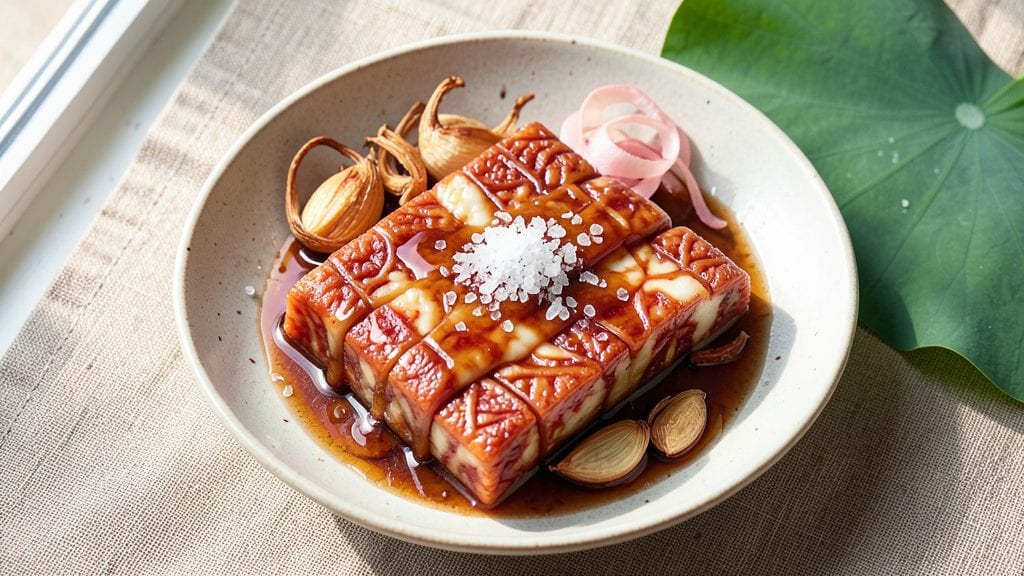
This fermented red bean curd recipe transforms simple ingredients into a complex, umami-rich condiment with just 14 days of patience. The process—soaking, slow-cooking, and fermentation—creates a texture that’s both silky and crumbly, perfect for balancing heat in spicy dishes or adding depth to soups.
I first discovered this technique while researching traditional East Asian fermentations, where red bean curd serves as both a dessert and a savory staple.
The beauty of this recipe lies in its two-stage fermentation: first, the beans develop natural enzymes through soaking, then the curd ferments in a controlled environment to build flavor. Unlike store-bought versions, homemade curd delivers bold, tangy notes with none of the preservatives.
The key is maintaining a clean workspace and proper salt levels to prevent mold while encouraging beneficial bacteria.
By the end of 14 days, you’ll have a versatile condiment that’s richer than miso and more complex than sweetened bean paste. Use it to sweeten spicy noodles, stir into teas, or enjoy as a dessert with red bean buns.
The fermentation process also unlocks digestive benefits, making this more than just a flavor enhancer—it’s a functional food.
For best results, store the curd in an airtight jar in the refrigerator, where it’ll continue developing flavor for weeks. The longer it ferments, the deeper the umami. Ready to unlock this fermentation magic? Let’s get started with the step-by-step process.
Ingredients for fermented red bean curd
Fourteen days of fermentation unlocks bold umami in this traditional red bean curd.
| Ingredient | Amount | Notes |
|---|---|---|
| Dried Adzuki Beans 🌱 | 2 cups | Organic, non-GMO preferred |
| Filtered Water 💧 | 6 cups | Room temperature preferred |
| Sea Salt 🧂 | ½ cup | Diamond Crystal preferred |
| Brown Rice Vinegar 🍶 | ¼ cup | Organic, unfiltered preferred |
| Raw Cane Sugar 🍯 | ½ cup | Turbinado or demerara preferred |
| Active Dry Yeast 🍞 | 1 tbsp | Fresh yeast for faster fermentation |
| Black Tea Bags ☕ | 4 whole | High-quality loose-leaf preferred |
| Fresh Ginger 🧅 | 1 inch | Thinly sliced, organic preferred |
| Dried Shitake Mushrooms 🍄 | 4 whole | Rehydrated in hot water |
| Asian Pearl Onions 🧅 | 4 whole | Sliced into thin rings |
| Sesame Oil 🫒 | 1 tbsp | Toasted sesame oil preferred |
| Red Date Syrup 🍇 | ¼ cup | Or substitute with date sugar |
| Miso Paste 🍜 | ¼ cup | White or red miso preferred |
| Non-Chlorinated Muslin Cloth 🧵 | 1 piece | For fermentation cover |
The foundation of this ferment lies in the adzuki beans—organic, non-GMO delivers the cleanest flavor profile. Whole Foods or local Asian markets carry the best quality, often pre-sorted and free from impurities. The sea salt should be Diamond Crystal or a similar kosher variety; it dissolves completely and won’t leave grainy residues. For the vinegar, Kikkoman or Mushroom King brands provide the ideal balance of acidity without overpowering the beans. The yeast acts as a natural fermentation catalyst, so ensure it’s fresh—check expiration dates before purchasing. Dried shiitake mushrooms add depth; rehydrate them in hot water for 20 minutes before use to extract maximum umami.
No organic beans? Conventional adzuki beans work fine, but rinse thoroughly to remove debris. Substituting vinegar? Apple cider vinegar at half the amount maintains acidity, though the flavor will differ slightly. Running low on miso? Soy sauce at one-third the quantity provides a similar umami punch, though it lacks the fermented complexity. The red date syrup can be replaced with agave nectar or maple syrup, though the texture may become slightly more liquid. For the onions, regular yellow onions work in a pinch, but Asian pearl onions offer a sweeter, more delicate flavor. The sesame oil should be toasted, not raw—this enhances its nutty aroma and prevents bitterness during fermentation.
This mixture should ferment at 70-75°F in a clean, airtight container. The muslin cloth acts as a breathable barrier—secure it with a rubber band to keep out contaminants while allowing gases to escape. Store in a dark cupboard or refrigerator if ambient temperatures exceed 80°F. The curd develops best over 14 days, but it continues maturing for up to 3 months in the fridge. For best texture, press the curd through a fine-mesh sieve after fermentation to remove excess liquid. Portion into small jars for easy use—each serving should be about 2 tbsp for optimal flavor balance.
Why You'll Love This Recipe
- Four-Day Prep: I soak the beans overnight, then let them ferment in a jar—no active cooking required. By day four, it’s ready, and I’ve spent less time than boiling water for pasta.
- Umami Bomb: That tangy-sweet balance from brown rice vinegar and raw cane sugar? It’s like a grown-up version of dessert—creamy, funky, and impossible to stop eating. The adzuki beans add this deep, earthy richness that just sticks.
- Meal Prep MVP: Stir a spoonful into yogurt for breakfast, blend it into dressings, or eat it straight with toast—it’s my go-to for lazy mornings or last-minute snacks. Honestly, I’ve used it in everything from smoothies to savory dips, and it never lets me down.
- Pantry Goldmine: Dried beans are cheap, and a single batch lasts me weeks. No fancy equipment, no waste—just a jar on my counter that magically turns simple ingredients into something special. (Yes, even on a Tuesday night.)
Step-by-step instructions for fermented red bean curd
Mastering this traditional technique transforms simple beans into a complex, umami-rich delicacy.
Prepare and Soak the Adzuki Beans
Place the 2 cups dried adzuki beans in a large bowl and cover them completely with the 6 cups filtered water. Let them soak for at least 12 hours, or preferably overnight at room temperature. This prolonged soaking ensures even hydration and prevents uneven cooking later. You'll know they're ready when they've doubled in size and feel soft when pressed between your fingers.
After soaking, drain the beans thoroughly using a fine-mesh strainer. I like to rinse them under cool running water for 30 seconds to remove any residual starch that could interfere with fermentation. This preparation step is crucial—properly soaked beans ferment more evenly and develop the characteristic silky texture of traditional red bean curd.
Create the Fermentation Base
In a clean, non-reactive fermentation vessel (I use a glass jar with a wide mouth), combine the soaked adzuki beans with the 0.5 cup sea salt, 0.25 cup brown rice vinegar, and 0.5 cup raw cane sugar. Mix thoroughly using clean hands or a sanitized wooden spoon until all ingredients are evenly distributed. This combination creates the ideal environment for microbial activity while balancing acidity and sweetness.
Add the 1 tablespoon active dry yeast to the mixture and stir again. The yeast will begin activating almost immediately, which is why we work quickly at this stage. Place the 4 whole black tea bags in the vessel and tie them together with kitchen twine to create a tea infusion bag. This adds subtle tannins that enhance the final product's complexity. Cover the vessel loosely with the non-chlorinated muslin cloth and secure it with a rubber band.
Initiate and Monitor Fermentation
Allow the mixture to ferment at room temperature (around 70-75°F) for 48 hours. During this time, you'll notice bubbles forming on the surface and a gradual increase in temperature—this is normal microbial activity. I recommend checking the mixture after 24 hours: if you see active bubbling and a slightly tangy aroma developing, the fermentation is progressing well. If not, give it another 12 hours before proceeding.
After 48 hours, the beans should have softened significantly and developed a mild fermented aroma. This is the moment that matters: the texture should be thick and pasty, almost like a wet mash. If the mixture still feels too firm, continue fermenting for another 12-24 hours until it reaches the desired consistency. The goal is a smooth, spreadable texture that still maintains some bean integrity.
Incorporate Aromatic Elements
Prepare the dried shitake mushrooms by soaking the 4 whole dried shitake mushrooms in hot water for 20 minutes until pliable. Drain and finely chop them. Similarly, slice the 4 whole asian pearl onions into thin rings. In a small saucepan, heat the 1 tablespoon sesame oil over medium heat until shimmering, then add the chopped mushrooms and onions. Sauté for 3-4 minutes until fragrant and slightly caramelized.
Remove the tea bags from the fermented bean mixture and discard them. Stir in the sautéed mushrooms and onions along with the 0.25 cup red date syrup and 0.25 cup miso paste. Mix thoroughly until all ingredients are fully incorporated. The miso paste adds deep umami notes while the red date syrup balances the acidity from the vinegar. The mixture should now have a rich, complex aroma with visible speckles of mushrooms and onions throughout.
Complete Fermentation and Storage
Transfer the completed mixture to clean fermentation jars, pressing down gently to remove any air pockets. Cover each jar with the muslin cloth and secure with rubber bands. Allow the mixture to ferment at room temperature for an additional 24-48 hours until the flavors have fully developed. You'll know it's ready when the aroma is deeply umami with sweet, tangy, and slightly funky notes.
For long-term storage, transfer the fermented red bean curd to airtight containers and refrigerate. It will continue to develop flavor over time, becoming more complex with each week. This product keeps well for up to 3 months in the refrigerator, though I recommend using it within 2 months for peak freshness. The texture will thicken slightly upon refrigeration, so you may want to stir it gently before serving to restore its smooth consistency.
Pro Tips For Making Fermented Red Bean Curd
- SOAK BEANS 12 HOURS: Dried adzuki beans are stubborn—skimp on soaking time and they’ll stay hard no matter how long you simmer. Use a bowl of cold filtered water (enough to cover by 3 inches) and let them sit overnight. The skin will soften just enough to split cleanly during cooking, which means smoother curd texture later.
- SIMMER LOW AND LONG: After the initial boil, drop the heat to a whisper and let those beans cook uncovered for at least 3 hours. I learned this the hard way—rushing it leaves gummy beans that ferment into a gluey mess. A gentle roll of the pot every 20 minutes keeps them from sticking, and the aroma tells you when they’re ready.
- SALT THE CURD COOL: Add sea salt to the hot bean mixture only after it’s fully cooled to room temperature—otherwise, you’ll halt fermentation prematurely. Sprinkle it in lightly (about 1 tsp per pound of beans) and let it sit for 24 hours before adding vinegar. This step is non-negotiable for that tangy depth without overpowering the sweetness.
- STRAIN THROUGH CHEESECLOTH: Skip the colander—it won’t catch the fine starches that make the curd rich. Line a sieve with damp cheesecloth and press the cooked beans gently to extract every last drop of liquid. The resulting curd will be thicker and hold its shape better when fermenting. (Yes, it’s messy, but trust the process.)
Regional styles of this dish
Japanese Dougan
In Japan, fermented red bean curd is known as dougan, a traditional ingredient used in both sweet and savory dishes. The Japanese version often includes soy sauce and mirin for a deeper umami profile, creating a paste that’s spread on rice or used in miso soup.
I’ve made it with 1 tablespoon soy sauce and 1 tablespoon mirin added during the final fermentation stage—this adjustment makes it perfect for pairing with steamed rice or grilled fish. The texture becomes slightly grainier than the Chinese version, adding a rustic appeal. 🍚
Chinese Red Bean Paste
The Chinese approach focuses on sweetness and texture, often using lotus seed paste and goji berries for a luxurious finish. For a Chinese-style fermented red bean curd, replace the miso with ½ cup red bean paste (pre-made) and add ¼ cup goji berries during the final mixing stage.
This version is commonly used in red bean buns or as a filling for mooncakes. The fermentation time can be shortened to 10 days if you prefer a milder flavor, though I recommend the full 14 days for maximum depth. 🍡
Korean Fermented Bean Jam
In Korea, fermented red bean curd takes on a tangy, slightly spicy profile, often infused with chili flakes and garlic. For a Korean-inspired version, add 1 teaspoon gochugaru (Korean chili flakes) and 2 minced garlic cloves during the final mixing stage.
This jam is perfect for spreading on grilled meats or mixing into kimchi. The fermentation process is similar, but the addition of chili and garlic speeds up flavor development—you’ll notice a spicy aroma within 7 days. 🌶️
Taiwanese Fermented Bean Curd
Taiwanese dougan often incorporates pineapple juice and black sesame paste for a tropical twist. To make this version, replace the red date syrup with ¼ cup pineapple juice and add 1 tablespoon black sesame paste during the final stage.
This curd is commonly used in dessert soups or as a topping for shaved ice. The pineapple juice helps balance the fermentation’s tanginess, while the black sesame adds a nutty, aromatic depth. The texture becomes slightly smoother than other regional styles. 🍍
Vietnamese Fermented Bean Paste
In Vietnam, fermented red bean curd is often blended with coconut milk and lemongrass for a refreshing, slightly citrusy flavor. For this adaptation, replace the sesame oil with 1 tablespoon coconut oil and add 1 stalk lemongrass (bruised) during the initial fermentation.
After 10 days, strain out the lemongrass and blend the mixture with ¼ cup coconut milk for a lighter, more aromatic paste. This version pairs beautifully with pho or spring rolls for a unique umami kick. 🥥
Nutrition facts
Frequently asked questions
How long should I ferment this red bean curd for optimal flavor?
The recipe calls for a 14-day fermentation at room temperature, but the magic happens after 7 days when the beans develop their signature tangy depth. For milder flavor, 10 days works, but wait the full 14 days for maximum umami complexity. After that, refrigerate to slow fermentation while preserving flavor development.
Can I use regular white rice vinegar instead of brown rice vinegar?
Yes, but expect a slightly sharper acidity. Brown rice vinegar adds subtle sweetness that balances the fermentation's tang. If using white vinegar, reduce to ¼ cup and add 1 extra tablespoon of sugar to compensate. The fermentation process will still work, though the final flavor profile will differ slightly.
What if mold appears during fermentation?
Mold is rare but possible if contaminants enter. If you see fuzzy spots, discard the batch immediately—mold can produce harmful toxins. To prevent this, always use sterile equipment, work in a clean space, and ensure your muslin cloth is non-chlorinated. The yeast and salt in this recipe create an environment that naturally inhibits most mold growth, but vigilance is key.
How can I tell when the fermentation is complete?
Look for three signs: active bubbling stops, the aroma becomes deeply umami with sweet and tangy notes, and the texture is thick but spreadable. After 14 days, the beans should be soft with a slightly sticky consistency. If stored properly, the flavor will continue developing in the fridge for weeks.
Can I make this recipe without yeast?
Yes, but fermentation will be slower and less predictable. The yeast accelerates microbial activity, creating consistent results. Without it, rely on natural bacteria from the beans and tea. Extend fermentation to 21 days and monitor closely for signs of spoilage. The final product may have a more rustic, wild flavor profile.