Side Dishes
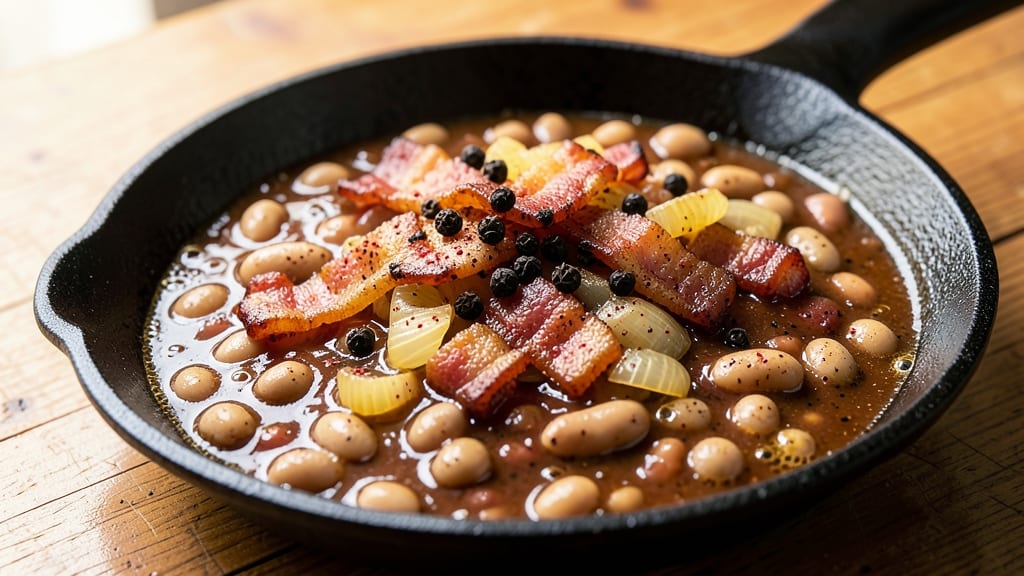
This old-fashioned baked bean recipe using canned beans brings back the rich, smoky-sweet flavors of classic comfort food with modern convenience. The secret lies in balancing brown sugar and molasses for that signature depth while letting the flavors meld over time—no fuss, just hearty satisfaction.
I’ve perfected this one-pot method to deliver tender beans in every bite, perfect for weeknight dinners or holiday tables.
The beauty of this recipe is its simplicity: canned beans cut prep time without sacrificing tradition, while bacon or smoked paprika adds that unmistakable smoky aroma. A slow oven bake transforms simple ingredients into a dish that tastes like it’s been simmering all day.
It’s the kind of recipe that feels like a hug in a bowl.
What you’ll end up with is a pot of velvety, caramelized beans with crispy edges, where every spoonful is packed with sweet, smoky, and savory notes. The sauce clings to the beans, creating that perfect balance of textures—tender yet hearty.
This is the baked bean recipe your family will beg for again and again.
Serve alongside grilled meats, cornbread, or even as a standalone main for a filling meal. The one-pot magic means minimal cleanup, and the flavors only get better the next day. Let’s make this classic taste like home.
Ingredients for old fashioned baked bean recipe using canned beans
Canned beans and pantry staples transform into rich, smoky-sweet comfort in one pot.
| Ingredient | Amount | Notes |
|---|---|---|
| Canned Navy Beans 🌱 | 4 cans | 15 oz each, drained and rinsed |
| Brown Sugar 🍬 | 1 cup | Packed firmly for sweetness |
| Molasses 🍯 | ½ cup | Unsulphured for authentic flavor |
| Yellow Onion 🧅 | 1 whole | Medium size, chopped fine |
| Smoked Paprika 🌶️ | 2 tsp | For deep smoky aroma |
| Ground Black Pepper 🌶️ | ½ tsp | Freshly cracked for heat |
| Salt 🧂 | 1 ½ tsp | Kosher or sea salt |
| Apple Cider Vinegar 🍎 | 1 tbsp | For tangy balance |
| Ketchup 🍅 | ½ cup | For subtle tomato depth |
| Diced Bacon 🥓 | 8 oz | Cooked until crispy |
| Bay Leaves 🍃 | 2 whole | Fresh or dried |
| Water 💧 | 1 ½ cups | For proper consistency |
The canned navy beans are the heart of this recipe—Great Northern or pinto beans work equally well, but navy beans hold their shape beautifully. For the molasses, unsulphured is key—it gives that authentic depth without bitterness. I always grab Whole Foods or Trader Joe's for their quality molasses, but any good grocery store carries it too. The bacon? Thick-cut, applewood-smoked if you can find it—it makes all the difference in that smoky aroma. Chop the onion finely; you want it to disappear into the dish rather than be noticeable.
No smoked paprika? Substitute with liquid smoke at half the amount—just a teaspoon—but it won’t be quite the same. Running low on molasses? Maple syrup works in a pinch, though it’ll be sweeter. Fresh bay leaves add a subtle complexity, but dried works fine at double the amount. The ketchup is a secret weapon—Heinz or Hunt’s are reliable, but any good-quality brand will do. If you’re feeling adventurous, swap the bacon for crumbled cooked sausage—just adjust the salt to taste. The apple cider vinegar is non-negotiable; it brightens up the sweetness and balances the richness.
This dish tastes even better the next day, so make a double batch if you’re feeding a crowd. Store leftovers in an airtight container in the fridge for up to 5 days, or freeze for 3 months. The sauce thickens as it cools, so a splash of water or broth brings it back to perfection when reheating. Serve with cornbread or crusty bread to soak up every last bit of that smoky-sweet sauce.
Why You'll Love This Recipe
- No-Chop Shortcut: I swear by the canned beans here—no soaking, no pre-cooking, just open and go. The onions get diced in two minutes while the oven preheats, and honestly? That’s my kind of cooking.
- Molasses Magic: That deep, caramelized sweetness from the molasses and brown sugar? It’s what turns this from "beans" to "something worth lining up for." The smoked paprika adds this smoky warmth that makes it taste like a hug in a bowl.
- Tailgate or Tuesday: Serve it at a picnic with cornbread, toss it on hot dogs for a cookout, or just eat it straight from the pot when you’re too tired to care. It’s the kind of dish that doesn’t judge your plans—or lack thereof.
- Budget Bulk: A single can of beans stretches into three meals for my family, and the rest of the ingredients cost pennies. Leftovers? Even better the next day—if they last that long, which, between us, they won’t.
Step-by-step instructions for smoky-sweet baked beans
This method delivers rich, tender beans with perfect smoky-sweet balance every time.
Cook the Bacon and Sauté the Onion
In a large Dutch oven, cook the 8 oz diced bacon over medium heat for 8-10 minutes, stirring occasionally, until deep golden brown and crispy. Remove the bacon with a slotted spoon and set aside, leaving the rendered fat in the pot. Here's the thing—this fat becomes the flavor base for your beans.
In the same pot, add the 1 whole yellow onion, chopped fine, and cook for 5-6 minutes until soft and translucent. You'll see the onions release moisture as they cook down. This step develops the foundation for your sauce, so don't rush it. If the onions start to brown too quickly, reduce the heat slightly to prevent burning.
Build the Flavor Base
Add the 2 tsp smoked paprika, 0.5 tsp ground black pepper, and 1.5 tsp salt to the pot with the onions. Stir for 30 seconds to toast the spices and release their aromas. This step intensifies the smoky flavor that defines classic baked beans.
Pour in the 1.5 cups water and scrape up any browned bits from the bottom of the pot. These bits pack serious flavor. Bring the mixture to a gentle simmer, then reduce heat to low and let it cook for 5 minutes to allow the spices to fully infuse. You should smell a deep, earthy aroma—this is where the magic begins.
Combine All Ingredients
Add the 4 cans navy beans (drained and rinsed), 1 cup brown sugar (packed firmly), 0.5 cup molasses, 1 tbsp apple cider vinegar, 0.5 cup ketchup, and 2 whole bay leaves to the pot. Stir everything together thoroughly until the sugar and molasses dissolve completely. This ensures even distribution of sweetness and depth throughout the beans.
Return the crispy bacon to the pot and give it one final stir. The beans should be thick and saucy at this point, with a rich, molasses-forward aroma. If the mixture looks too thick, add 1-2 tablespoons of water to reach your desired consistency. The beans should coat the back of a spoon but still be spreadable.
Simmer Until Tender
Cover the Dutch oven and transfer it to a 350°F oven. Bake for 2 hours, then remove the lid and increase the oven temperature to 375°F. Continue baking uncovered for another 30-45 minutes until the sauce thickens and the beans are fork-tender with a glossy sheen.
Here's the moment that matters: the beans should be soft enough to crush slightly between your fingers but still hold their shape. The sauce should coat the beans completely, with a beautiful caramelized color. If the top starts to darken too quickly, tent it loosely with aluminum foil to prevent burning while allowing moisture to escape.
Pro Tips For Making Old Fashioned Baked Bean Recipe Using Canned Beans
- Drain and Rinse Beans: Canned navy beans come packed in saltwater, and skipping the rinse means a bland, watery mess. Dump them into a colander, give them a good shake, and run cold water over them—this also removes any weird aftertaste from the canning process. Trust me, your beans will taste fresher and absorb flavors better.
- Caramelize the Onion First: Raw onion in baked beans? Nope. Sauté it in a little oil until it’s deep golden—about 10 minutes—and you’ll get that sweet, jammy depth that makes old-fashioned beans sing. I used to skip this, and the dish always felt flat until I tried it.
- Skip the Extra Molasses: That bottle of molasses is sticky and tempting, but start with just 1/4 cup—it’s already powerful. Too much turns your beans into a syrup bomb, and you’ll regret it when the dish tastes cloying instead of balanced. Taste as you go; you can always add more.
- Cover Tightly, Then Uncover: Start with a lid on to trap steam and soften the beans, but after 45 minutes, crack the lid or prop it open with a spoon. The last 20 minutes of baking need airflow to thicken the sauce and develop that rich, caramelized crust—no one wants mushy beans with a watery glaze.
Pro cooking tips for this recipe
One-Pot Mastery
This recipe thrives in a Dutch oven—its deep sides prevent spills while baking, and the heavy material ensures even heat distribution. I swear by my Lodge 5.5-quart Dutch oven for its cast iron durability and nonstick properties after seasoning.
If you don’t own one, a heavy-bottomed oven-safe skillet or 6-quart pot works just fine. The key is using a pot with a tight-fitting lid to trap steam during the initial baking phase. 🔥
Browning Bacon Right
Don’t skip the bacon—its rendered fat is the flavor foundation! Cook it until deep golden brown and crispy (about 8-10 minutes) before removing. The fat left behind caramelizes with the onions, creating a rich base.
Pro tip: Use applewood-smoked bacon for that authentic smoky depth, but hickory-smoked works too. If your bacon cooks too quickly, reduce heat to medium-low to prevent burning. The goal is crispy edges, not charred bits.
Spice Toasting Trick
Toast your smoked paprika and black pepper in the bacon fat for 30 seconds—this releases their essential oils and intensifies their flavors. Skip this step, and your beans will taste flat.
I also like adding a pinch of ground cinnamon (about ¼ tsp) here for warmth, though it’s optional. Stir constantly to prevent burning, and you’ll notice the kitchen fills with an irresistible aroma. This is where the magic starts! ⚡
Sauce Consistency
The sauce should be thick but spoonable—like a cross between a stew and a glaze. If it’s too thin after mixing, simmer uncovered for 5-10 minutes on the stovetop to reduce. Too thick? Add 1-2 tbsp water or broth while baking.
The beans should be coated but not swimming in liquid. I test consistency by dipping a spoon in—if the sauce clings slightly, you’re golden. The final texture should be velvety with crispy edges from the uncovered baking phase.
Oven Temperature Shift
Switching from 350°F to 375°F in the final 30-45 minutes is critical. The lower temp ensures even cooking, while the higher temp caramelizes the sauce and creates that glossy sheen. If your oven runs hot, tent the pot loosely with foil to prevent over-browning.
I check doneness by piercing a bean with a fork—it should crush slightly but hold shape. Overcooking turns beans mushy, so keep an eye on it!
Resting for Perfection
Let the beans rest for 10-15 minutes off the heat before serving. This allows the juices to redistribute, making every bite richer and more flavorful. Skipping this step means dry beans and runny sauce.
I also like stirring in a splash of apple cider vinegar (another ½ tbsp) at the end to brighten the flavors. Serve immediately for crispy edges or reheat gently for a softer texture. Either way, it’s pure comfort food magic. 💫
Nutrition facts
Frequently asked questions
Can I use any type of canned beans for this recipe?
Navy beans are traditional, but Great Northern or pinto beans work beautifully too. Stick to white or light-colored beans—they absorb the smoky-sweet sauce better than darker varieties. Just avoid beans with skins that might not soften properly, like kidney beans.
Why does the recipe call for both molasses and brown sugar?
The molasses adds that deep, caramel-like richness while the brown sugar balances it with sweetness. Together they create the classic smoky-sweet flavor profile. If you're short on molasses, substitute with maple syrup, but reduce the amount by ¼ cup since it's sweeter.
Can I make this recipe on the stovetop instead of baking?
Simmer everything in a pot on low heat for 1.5-2 hours instead of baking, stirring occasionally. The sauce will be slightly thinner, but the flavors will develop just as well. For extra depth, cover the pot and let it cook longer to thicken the sauce naturally.
What if my beans turn out too mushy?
Overcooking is the usual culprit. Check doneness by piercing a bean with a fork—it should crush slightly but hold shape. If they're mushy, reduce future cooking time by 15-20 minutes and keep an eye on them. For extra tenderness without mushiness, try adding 1 extra bay leaf to the pot—it helps soften beans more evenly.
How can I make this vegetarian?
Swap the bacon for smoked tofu or tempeh (crumbled and pan-fried) and use liquid smoke (½ teaspoon) to mimic the smoky flavor. Boost umami with 1 tablespoon soy sauce or Worcestershire sauce. The dish will still be hearty and satisfying!