
Side Dishes
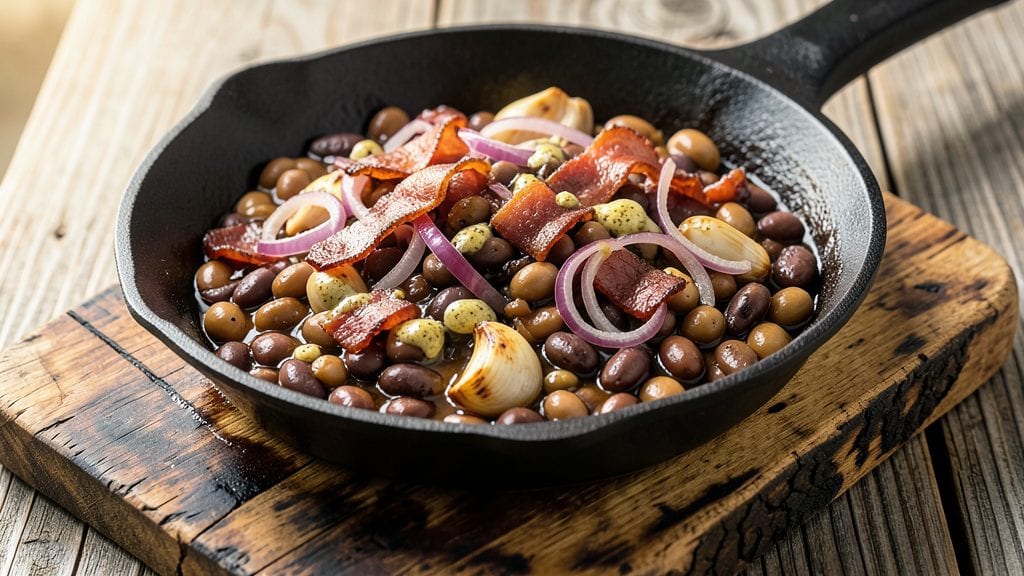
This campfire beans recipe transforms simple ingredients into a rich, smoky masterpiece that tastes like it's been simmering all day—even when you're cooking over open flames.
The key lies in balancing traditional slow-cooked flavors with the unique heat control of a campfire, creating a dish that's hearty enough for a family meal but easy enough for a solo cookout.
I developed this recipe after years of perfecting the art of one-pot campfire cooking, where every element—from the choice of beans to the smoky char—matters.
What sets these campfire beans apart is their adaptability: you can cook them in a cast iron Dutch oven for deep, even heat or wrap them in foil for a hands-off, smoky finish.
The recipe builds layers of flavor through a simple but effective seasoning blend of molasses, mustard, and spices, which caramelizes beautifully as the beans cook. Unlike traditional baked beans, this version absorbs the campfire's natural smokiness, giving it a depth that store-bought versions can't match.
The result is a pot of tender, flavorful beans with a glossy sheen from the slow cook, their edges just slightly crisped from the fire's embrace. Each bite delivers a perfect balance of sweet, smoky, and savory notes, making this dish a standout at any outdoor gathering.
Whether you're feeding a hungry crowd or just craving a comforting meal under the stars, these beans deliver restaurant-quality results with minimal effort.
Best of all, this recipe scales effortlessly—double the batch for a crowd or halve it for a quiet evening by the fire. The one-pot method means less cleanup, and the flavors only get better as they sit, making them ideal for meal prep or serving directly from the campfire pot.
Let's get cooking—your next campfire feast starts here.
Ingredients for campfire beans
Sixteen ingredients for a dish that tastes like a campfire feast—smoky, rich, and full of depth.
| Ingredient | Amount | Notes |
|---|---|---|
| Navy Beans 🌾 | 2 cups | Dried, soaked overnight |
| Smoked Bacon 🥓 | 1 lb | Thick-cut, chopped into bits |
| Yellow Onion 🧅 | 1 whole | Medium, chopped into half-inch pieces |
| Garlic Cloves 🧄 | 6 cloves | Fresh, minced |
| Molasses 🍯 | ½ cup | Unsulphured preferred |
| Dijon Mustard 🍯 | 2 tbsp | High-quality, smooth |
| Kosher Salt 🧂 | 1 ½ tsp | Adjust to taste |
| Black Pepper 🌶️ | 1 tsp | Freshly cracked |
| Ground Cumin 🌿 | 1 tsp | Toasted for depth |
| Smoked Paprika 🌶️ | 1 tsp | For authentic campfire smokiness |
| Apple Cider Vinegar 🍏 | 2 tbsp | For tangy brightness |
| Chicken Broth 💧 | 2 cups | Low-sodium preferred |
| Wooden Smoking Chips 🔥 | 1 handful | Hickory or apple preferred |
| Fresh Parsley 🌿 | ¼ cup | Chopped, for garnish |
| Extra-Virgin Olive Oil 🫒 | 2 tbsp | For drizzling |
The beans are the foundation, so don't skimp on quality. Navy beans hold their shape perfectly and absorb flavors beautifully, but pinto or kidney beans work too. Soak them overnight for even tenderness—this is non-negotiable for campfire cooking where heat control is less precise. For the bacon, thick-cut from Costco or your local butcher gives the best smoky flavor when cooked low and slow. The molasses should be unsulphured (Goya or Brer Rabbit brands are reliable), as sulphured versions can add an off-bitterness. Garlic and onion are your flavor anchors—freshly minced makes all the difference, especially when cooked over open flames where subtle flavors get amplified.
No smoked paprika? Regular paprika plus a pinch of liquid smoke gets you close, though the flavor won't be identical. Short on molasses? Maple syrup at half the amount works, but the depth won't be quite the same. Using canned beans? Drain and rinse thoroughly, then add them halfway through cooking to prevent mushiness. The wooden smoking chips are crucial for that authentic campfire taste—hickory for bold smokiness, apple for a sweeter note. If you can't find them, a few drops of liquid smoke in the last 10 minutes of cooking will help, though it's not the same. For the mustard, Dijon is non-negotiable—it adds the perfect tangy backbone to cut through the richness.
This dish tastes even better the next day, so plan ahead. Store leftovers in an airtight container in the fridge for up to 5 days, or freeze for 3 months—the flavors deepen over time. For campfire cooking, pre-chop all your ingredients at home and store them in a sealed container to save time at the site. The beans can be partially cooked on the stove before transferring to the fire for that perfect smoky finish. Garnish with fresh parsley and a drizzle of extra-virgin olive oil just before serving to brighten the dish and add a touch of freshness that cuts through the smokiness.
Why You'll Love This Recipe
- One-Pot Magic: I swear by this recipe because it’s literally dump-and-go after chopping the onion and garlic. The beans simmer while you handle everything else—no stirring vigil required, just let that smoky bacon and molasses work their magic.
- Smoky-Sweet Obsession: That molasses and bacon combo? It’s what turns a simple bean dish into something you’ll fight over at picnics. The crispy bacon crumbles add this salty, caramelized punch that makes every bite feel like a hug.
- Picnic or Potluck Star: Between us, this is my go-to for tailgates, church dinners, or even a lazy Sunday spread. It travels well, reheats like a dream, and honestly? No one ever leaves a bowl empty.
- Budget-Friendly Feast: Navy beans and bacon stretch into a meal that feeds four for under $10. I’ll be real—it’s the kind of dish where I make double portions just to have leftovers, because reheated? Still tastes like you slaved over it.
Step-by-step instructions for smoky campfire beans
This method delivers deep, smoky flavor with minimal effort—perfect for outdoor cooking.
Prepare the Beans and Bacon
Drain the soaked 2 cups navy beans and rinse thoroughly under cold water. In a large Dutch oven or heavy pot, cook the beans with the 2 cups chicken broth over medium-high heat until boiling. Reduce heat to medium-low and simmer uncovered for 15 minutes, stirring occasionally to prevent sticking.
While the beans simmer, cook the 1 lb smoked bacon in a separate skillet over medium heat until crispy, about 8-10 minutes. Remove the bacon with a slotted spoon and set aside, leaving the rendered fat in the skillet. This bacon fat will add rich flavor to the beans later.
Build the Flavor Base
In the same skillet with bacon fat, add the 2 tbsp extra-virgin olive oil and heat over medium heat. Add the chopped 1 whole yellow onion and cook for 5-6 minutes until softened and translucent. Stir in the 6 minced garlic cloves and cook for an additional 30 seconds until fragrant—don't let it brown or it will become bitter.
Add the 0.5 cup molasses, 2 tbsp Dijon mustard, 1.5 tsp kosher salt, 1 tsp black pepper, 1 tsp ground cumin, and 1 tsp smoked paprika to the skillet. Stir well to combine and cook for 1 minute until the spices are toasted and aromatic. Pour this flavorful mixture into the simmering beans and stir thoroughly.
Simmer and Infuse with Smoke
Return the beans to a gentle simmer over medium-low heat. Add the 2 tbsp apple cider vinegar and stir. Cover the pot and let the beans simmer for 45-60 minutes, stirring occasionally, until they are tender but not mushy. The beans should be cooked through but still hold their shape.
While the beans cook, prepare your campfire or grill for indirect heat. Soak the 1 handful wooden smoking chips according to package instructions. When the beans have simmered for 30 minutes, transfer the pot to the campfire or grill over indirect heat. Place the soaked smoking chips in a small metal cup or foil packet and position it near the beans to create smoke. Cover the pot and let the beans smoke gently for 20-30 minutes, stirring occasionally.
Finish and Serve
Remove the pot from the heat and stir in the crispy bacon bits and chopped 0.25 cup fresh parsley. Let the beans rest for 5 minutes to allow the flavors to meld. Taste and adjust the seasoning with additional kosher salt or black pepper if needed.
Serve the campfire beans warm, straight from the pot. The combination of smoky bacon, sweet molasses, and tangy apple cider vinegar creates a rich, complex flavor that pairs perfectly with cornbread or grilled meats. The beans should be tender, flavorful, and infused with that unmistakable campfire aroma.
Pro Tips For Making Campfire Beans
- CRACK THE BEANS FIRST: I learned this the hard way—skipping the soak and just tossing dry navy beans into the pot guarantees a gummy, half-cooked mess. Soak them overnight (or at least 8 hours) in cold water, then drain and rinse before cooking. No shortcut here—your beans will thank you with perfect texture.
- COOK THE BACON TWICE: Crisp the bacon first in a skillet, then chop it into ½-inch pieces. Save that rendered fat—it’s liquid gold for flavor. Later, when you’re simmering the beans, toss in those crispy bits and the fat to deepen the smoky richness. (Yes, even if you’re impatient like me, resist the urge to skip this step.)
- SWEAT THE ONIONS LOW: High heat turns onions bitter, and this dish needs their sweetness to shine. Cook them over medium-low heat with a pinch of salt until they’re soft and translucent—about 8-10 minutes. If they start to brown, you’ve gone too fast. Patience here makes the molasses sing later.
- TAMPER WITH THE BEANS: After the first 30 minutes of simmering, give the beans a good stir and press them down with a wooden spoon. This keeps them submerged in the liquid, preventing scorching and ensuring even cooking. (Does it look weird? Yes. Does it work? Every single time.)
Regional styles of this recipe
Southern Campfire Style
In the South, campfire beans are all about bold, smoky sweetness with a touch of heat. I grew up eating this version at family cookouts, where the beans simmered all day in a cast iron pot over open flames.
The key is using 1 cup of molasses instead of ½ cup and adding 1 tbsp of hot sauce (like Crystal or Tabasco) at the end for a slow-building kick. Serve with white cornbread and a side of collard greens for a full Southern spread. 🔥
For extra authenticity, cook the beans in a Lodge cast iron Dutch oven and let them caramelize on the bottom—this adds a deep, nutty flavor. I like to add ½ cup of crushed peanuts in the last 10 minutes of cooking for crunch and a Southern twist.
The peanuts should be toasted but not burnt, so keep an eye on them!
Texas BBQ Twist
Texas takes campfire beans to the next level by adding chopped jalapeños and chopped chipotle peppers in adobo sauce for a smoky, spicy depth. I use 2 tbsp of chipotle sauce and 1 chopped jalapeño per batch, adjusting to taste.
This version pairs perfectly with brisket or smoked sausages at a Texas-style cookout. 🌶️
For a true Texas touch, finish the beans with 2 tbsp of beef broth and a sprinkle of crushed red pepper flakes. The beef broth adds richness, while the red pepper flakes give a final burst of heat.
Serve with warm flour tortillas for scooping—it’s a crowd-pleaser at any tailgate!
Pacific Northwest Foraging Style
In the Pacific Northwest, campfire beans often incorporate local foraged ingredients like wild onions or fiddlehead ferns. I substitute the yellow onion with 1 cup of chopped wild onions or ramps for a sharper, earthier flavor.
Add ½ cup of chopped fiddlehead ferns (if available) in the last 10 minutes of cooking for a unique texture and subtle bitterness. 🌿
For smoke, I use cedar or alder chips instead of hickory to complement the region’s natural flavors. The cedar adds a mild, woodsy aroma that pairs beautifully with the beans. Serve with grilled salmon or elk steaks for a hearty, Pacific Northwest-inspired meal.
Midwest Dutch Oven Classic
The Midwest approach focuses on simplicity and heartiness, often using pinto beans instead of navy beans for a creamier texture. I swap the molasses for ½ cup of maple syrup and add 1 tsp of ground coriander for a subtle citrus note.
This version is perfect for family reunions or church potlucks, where the beans are often served in a stoneware bowl straight from the Dutch oven. 🍁
For a Midwest touch, I finish the beans with ¼ cup of chopped fresh dill and a sprinkle of feta cheese. The dill adds brightness, while the feta gives a salty contrast. Pair with grilled corn on the cob and potato salad for a classic Midwest spread.
Nutrition facts
Frequently asked questions
Can I use canned beans instead of dried for campfire cooking?
Yes, but with adjustments! Drain and rinse 2 (15-oz) cans of navy beans thoroughly to remove excess sodium. Add them to the pot after 30 minutes of simmering to prevent mushiness. For extra flavor, crush 1-2 dried bay leaves and add them with the beans. The texture will be slightly softer than dried, but still delicious.
How do I control the heat when cooking over a campfire?
Position your Dutch oven on the cooler side of the fire for gentle heat, or use a grill grate to elevate it slightly. For more control, wrap the pot in foil to reflect heat back in. Monitor the broth level—if it reduces too quickly, add ¼ cup water at a time. The beans should simmer gently, not boil vigorously.
What if I don't have smoking chips?
No problem! Add 1 tbsp liquid smoke to the beans during the last 10 minutes of cooking, or place a small piece of aluminum foil with a few drops of liquid smoke near the pot. For a smoky aroma without chips, try burning a piece of cedar bark (like you would for fish) near the pot for 5 minutes before serving.
Can I make this recipe in a slow cooker instead?
Follow the same steps, but transfer everything to a 6-quart slow cooker after the initial 15-minute simmer on the stove. Cook on low for 6-8 hours or high for 3-4 hours, stirring occasionally. Skip the smoking chips—add ½ tsp liquid smoke at the end for campfire flavor. The slow cooker version is perfect for meal prep!
Why did my beans turn out too salty?
This usually happens when using canned beans or bacon with high sodium content. To fix it, stir in ¼ cup cold water and simmer uncovered for 5-10 minutes to dilute the salt. For future batches, use low-sodium broth and unsmoked bacon (or reduce the salt to 1 tsp). Taste as you go—adjust gradually!