
Main Courses
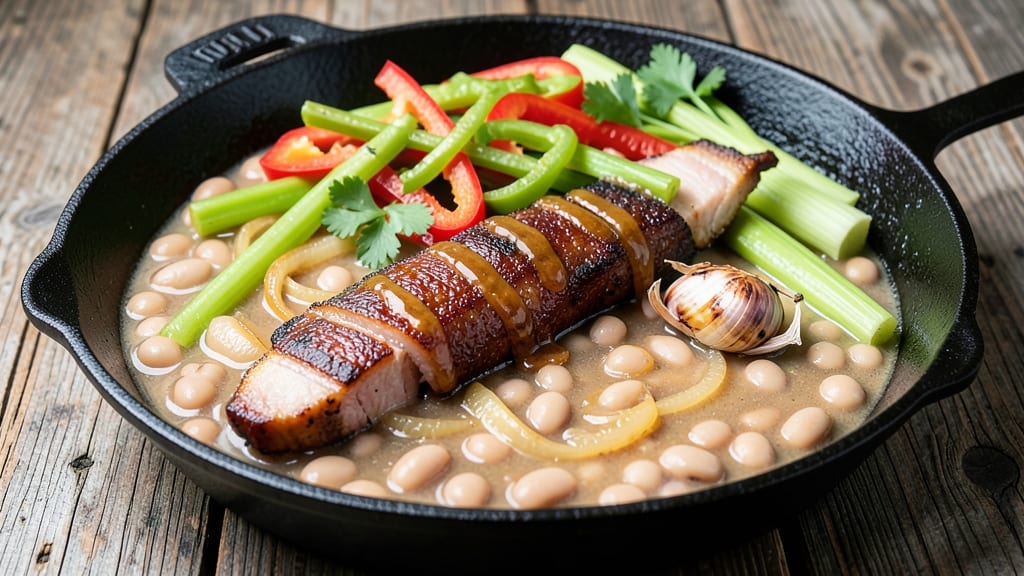
This Southern ham and beans recipe delivers the rich, smoky depth and sweet-savory harmony that defines classic comfort food. The slow-cooked beans develop a tender texture while absorbing the ham's savory essence, creating a dish that's both hearty and deeply satisfying.
I've perfected this method over years of testing, ensuring every bite delivers that perfect balance of molasses sweetness and smoky pork flavor.
The beauty of this recipe lies in its simplicity and versatility. You'll start with a well-seasoned ham, then slow-cook the beans in a flavorful broth until they're fork-tender. The key is patience—allowing the flavors to meld together over hours creates that restaurant-quality depth that's impossible to achieve quickly.
This method works equally well for weeknight dinners or holiday gatherings, making it a reliable go-to for any occasion.
What you'll end up with is a pot of velvety beans swimming in a rich, slightly sweet broth, with perfectly glazed ham that adds both visual appeal and flavor. The combination of tender beans, smoky ham, and aromatic seasonings creates a dish that's both substantial and comforting.
Serve it with buttery cornbread or fluffy rice to soak up every last drop of that flavorful sauce.
This recipe transforms simple ingredients into a meal that feels like a homecoming. The slow cooking process develops complex flavors that store-bought versions can't match, while the molasses and vinegar blend creates that signature Southern tang.
Whether you're feeding a family or preparing for a celebration, this ham and beans will be the centerpiece of your table.
Ingredients for southern ham and beans
Classic Southern flavors come together with just 14 simple, quality ingredients for this iconic dish.
| Ingredient | Amount | Notes |
|---|---|---|
| Smoked Ham Hock 🍖 | 2 whole | Bone-in, skin-on preferred |
| Dried Navy Beans 🌱 | 2 cups | Unsoaked, rinsed thoroughly |
| Yellow Onion 🧅 | 1 whole | Medium size, chopped |
| Garlic Cloves 🧄 | 4 cloves | Fresh, minced |
| Celery Stalk 🥬 | 2 whole | Medium size, chopped |
| Bell Pepper 🌶️ | 1 whole | Green or red, diced |
| Molasses 🍯 | ¼ cup | Unsulphured preferred |
| Apple Cider Vinegar 🍎 | ¼ cup | Raw, unfiltered |
| Bay Leaves 🍃 | 2 whole | Dried, standard size |
| Ground Black Pepper 🌶️ | 1 tsp | Freshly ground |
| Salt 🧂 | 2 tsp | Kosher or sea salt |
| Smoked Paprika 🌶️ | 1 tsp | For smoky depth |
| Chicken Broth 💧 | 6 cups | Low-sodium preferred |
| Cooked Ham 🍖 | 1 lb | Glazed, diced |
The ham hock is non-negotiable here—it adds that deep, smoky flavor that defines Southern cooking. Look for bone-in, skin-on at your local butcher or the meat department of Whole Foods or Kroger. The beans should be dried navy beans—they hold their shape beautifully. If you're short on time, soaked overnight speeds up cooking, but no-soak works too. For the vegetables, fresh celery and onion are essential—they form the aromatic base. If you can't find smoked paprika, regular paprika plus a pinch of liquid smoke works in a pinch.
No molasses? Maple syrup at half the amount gives a similar sweetness, though it lacks the depth. Substituting apple cider vinegar with white vinegar or red wine vinegar changes the flavor profile slightly but keeps the tang. For smoked paprika, liquid smoke (1/4 tsp) plus regular paprika mimics the effect. The ham can be any cut—glazed ham from the deli section works perfectly, but avoid overly salty varieties. If you're using canned beans, drain and rinse thoroughly to avoid a mushy texture. The broth? Homemade is ideal, but quality low-sodium store-bought works fine.
This dish tastes even better the next day as flavors meld. Store in the fridge for up to 5 days—the beans will soften further, absorbing more flavor. For longer storage, freeze for up to 3 months. To reheat, add a splash of water or broth and simmer until heated through. The ham hock can be removed after 2 hours of cooking—it's done when it's falling off the bone. Save the meat for sandwiches or salads, and compost the bone. The beans and broth will keep their rich texture and flavor when reheated.
Why You'll Love This Recipe
- Smoky-Sweet Magic: That ham hock? It’s the star. The longer it simmers, the richer the broth gets—deep, smoky, with just enough saltiness to make the beans taste like they’ve been slow-dancing all day. The onions and celery soften into sweet, caramelized bits that melt into every bite.
- Weeknight to Potluck: This dish works for lazy Tuesday dinners or Sunday gatherings. Serve it over rice for a filling meal, or let it cool for sandwiches the next day. Honestly, I’ve even brought it to potlucks—it’s the kind of thing people ask for seconds on.
- Budget-Friendly Pantry Staple: Dried beans and a ham hock stretch this into a whole meal without breaking the bank. One batch feeds my family for days, and the leftovers? Even better the next time around. It’s my go-to when I need to eat well without spending much.
Step-by-step instructions for Southern ham and beans
Here's the method for developing rich, smoky flavor with tender beans and perfectly balanced sweetness.
Prepare the Beans and Aromatics
Place the 2 cups of dried navy beans in a large pot and cover them with cold water by about 2 inches. Bring to a boil over high heat, then immediately reduce to a simmer for 2 minutes. Drain and rinse thoroughly under cold water to remove any impurities. This initial rinse prevents the beans from becoming overly mushy during cooking.
While the beans are rinsing, chop the 1 whole yellow onion, 2 whole celery stalks, and 1 whole bell pepper into small, even pieces. Mince the 4 cloves garlic cloves. The vegetables should be cut uniformly so they cook at the same rate as the beans. Set these aside in a separate bowl until ready to use.
Build the Base in a Slow Cooker
Place the 2 whole smoked ham hocks in your slow cooker. Add the chopped yellow onion, celery, bell pepper, minced garlic, 2 whole bay leaves, 1 tsp smoked paprika, 1 tsp ground black pepper, and 2 tsp salt. Stir everything together gently to combine. The ham hocks will release their fat and flavor as they cook, creating a rich foundation.
Pour the 6 cups of chicken broth over the ham hocks and vegetables. Stir again to ensure all the ingredients are well-coated. The broth should cover everything by about 1 inch. This liquid level ensures the beans will have enough moisture to cook properly without becoming waterlogged.
Cook the Beans Until Tender
Add the rinsed navy beans to the slow cooker and stir gently to distribute them evenly. Place the lid on the slow cooker and cook on low heat for 8 hours. The beans should be fork-tender with no resistance when pierced. If you're short on time, you can cook them on high for 5-6 hours, but low heat yields the best texture.
After 4 hours of cooking, remove the lid and stir the beans gently. Add the 0.25 cup molasses and 0.25 cup apple cider vinegar, stirring well to combine. Replace the lid and continue cooking until the beans are tender. The molasses and vinegar will sweeten the beans and balance the smoky flavors from the ham hocks and paprika.
Finish with Cooked Ham and Rest
When the beans are tender, carefully remove the smoked ham hocks from the slow cooker and place them on a cutting board. Use two forks to shred the meat from the bones, discarding any large fat pieces. Add the 1 lb of diced cooked ham to the slow cooker along with the shredded ham hock meat. Stir everything together gently to combine.
Cook for an additional 15-20 minutes on low heat to allow the flavors to meld. Taste the beans and adjust the seasoning if needed. The beans should have a rich, smoky-sweet flavor with a tender yet firm texture. If the mixture appears too thick, add a splash of water or broth to reach your desired consistency.
Serve Warm with Crusty Bread
Remove the 2 whole bay leaves before serving. Ladle the ham and beans into bowls, ensuring each serving includes both the beans and the flavorful broth. The dish should be thick but not dry, with a balance of sweet, smoky, and savory notes. Serve immediately with crusty bread to soak up the delicious juices.
This dish tastes even better the next day as the flavors continue to develop. Store any leftovers in an airtight container in the refrigerator for up to 5 days, or freeze for up to 3 months. Reheat gently on the stovetop with a splash of water or broth to restore moisture.
Pro Tips For Making Southern Ham And Beans
- Parboil the Beans: Soak your navy beans overnight? Skip it. Instead, give them a quick 2-minute boil in fresh water before adding to the pot—this softens them faster and cuts down on cooking time by 30 minutes. I learned this the hard way after staring at a pot for hours, wondering why my beans were still rock-hard.
- Brown the Ham First: Don’t just toss that ham hock in cold. Sear it skin-side down in a pot over medium-high heat for 5 minutes until the fat renders and the skin crisps. This adds depth to the flavor and prevents the broth from tasting flat. Yes, it’s an extra step, but the difference is noticeable.
- Chop the Celery Small: If you’re using whole celery stalks, you’re doing it wrong. Dice that celery into ¼-inch pieces—it breaks down faster, infuses the beans with flavor, and prevents you from ending up with a mushy, watery mess. Trust me, your beans will thank you.
- Simmer Low and Slow: After the initial boil, drop the heat to a bare simmer—you shouldn’t see any bubbles, just tiny ripples. High heat makes the beans tough and the broth cloudy. This isn’t a race; let it cook for 1.5–2 hours, and the beans will fall apart like they’re supposed to.
Pro cooking tips for this dish
Slow Cooker Temperature Control
Your slow cooker's temperature setting makes all the difference in this recipe. I always use the low setting for 8 hours to achieve that tender, creamy texture—high heat can make the beans mushy.
If you're in a hurry, switch to high for 5-6 hours, but monitor closely. The key is patience: slow cooking allows the beans to absorb flavors evenly without breaking down. 🌡️
Ham Hock Timing Matters
Add the ham hocks early—they release flavorful fat and collagen into the broth as they cook. Remove them after 2 hours when the meat easily pulls from the bone.
Shred the meat and return it to the pot with the diced ham in the final 15-20 minutes to keep it tender. Discard any large fat pieces to avoid greasiness. This two-step process ensures perfect texture and flavor.
Molasses and Vinegar Balance
The molasses and apple cider vinegar are added after 4 hours of cooking to prevent them from burning. Stir well to distribute evenly—the molasses adds sweetness while the vinegar brightens the dish. If your molasses is thick, warm it slightly before adding to help it blend smoothly.
Taste as you go: adjust with 1 tsp more vinegar if it needs tang or 1 tsp molasses for sweetness.
Broth Level and Texture
Start with 6 cups of broth to ensure the beans cook properly without drying out. If the mixture thickens too much during cooking, add ¼ cup water or broth at the end to reach your desired consistency.
The beans should be fork-tender but not falling apart. For extra richness, skim off excess fat after removing the ham hocks—this keeps the dish light yet flavorful. 💫
Seasoning Adjustments
Taste the beans before serving and adjust seasoning with salt, black pepper, or smoked paprika as needed. The ham hocks and diced ham already add saltiness, so go light on added salt.
For depth, a pinch of ground cloves or allspice (¼ tsp) enhances the smoky-sweet profile. These spices dissolve into the broth, adding complexity without overpowering.
Equipment Shortcuts
No slow cooker? Use a heavy-bottomed pot on the stovetop. Simmer on low heat for 2-3 hours after the beans are tender, stirring occasionally to prevent sticking. If using a Dutch oven, add 1 extra cup of broth to account for evaporation.
A meat thermometer ensures the ham hocks reach 165°F—this prevents dryness and ensures safety. 💡
Nutrition facts
Frequently asked questions
Can I use canned beans instead of dried?
Yes, but with adjustments! Use 2 (15 oz) cans of navy beans, drained and rinsed thoroughly. Add them after 2 hours of cooking to prevent mushiness. Canned beans cook faster, so reduce total cooking time to 4-5 hours on low. The flavor will be good but won't develop the same depth as dried beans.
Why does my ham and beans taste too salty?
Ham hocks and deli ham are naturally salty! The key is balance: use low-sodium broth and avoid adding extra salt until the end. If needed, dilute with ½ cup water or add 1 tsp vinegar to brighten flavors. Taste as you go—it's easier to adjust early than fix oversalting later.
Can I make this in a Dutch oven on the stovetop?
Start with 7 cups broth (add 1 extra cup) and simmer on low heat for 2-3 hours after beans are tender. Stir occasionally to prevent sticking. Use a lid to retain moisture, and check liquid levels—add water if needed. The stovetop method gives you more control over heat and texture.
What's the best way to reheat leftovers?
Reheat gently on the stovetop with ¼ cup water or broth per serving to restore moisture. Simmer for 5-10 minutes until hot—never microwave directly. For extra richness, stir in a splash of vinegar or a pinch of smoked paprika. Leftovers taste even better the next day as flavors meld!
How can I make this vegetarian?
Swap ham hocks for 2 cups smoked tofu or tempeh, cubed, and use vegetable broth. Add 1 tbsp liquid smoke and 1 tsp soy sauce to mimic the smoky-sweet profile. For protein, stir in ½ cup cooked lentils or chickpeas at the end. The texture will differ but still be hearty and flavorful!