
Main Courses
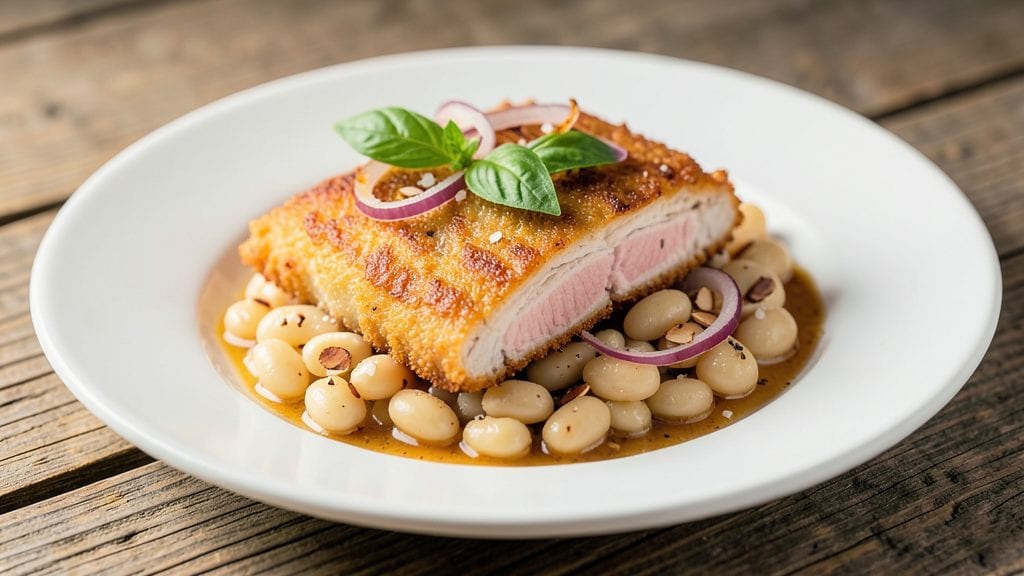
This schnitzel-style beans recipe transforms humble ingredients into a hearty, restaurant-worthy meal where crispy-crusted meat meets tender beans in perfect harmony. The technique I’ve perfected—double-breading the meat for that golden, shatteringly crisp exterior while keeping the inside juicy—is what makes this dish stand out from basic schnitzel recipes.
It’s the kind of comfort food that feels indulgent yet balanced, with a side of beans that soaks up every savory bite.
The beauty of this recipe lies in its simplicity: just a few pantry staples and 30 minutes of active time deliver a dish that tastes like it belongs on a dinner table, not a weeknight shortcut.
The beans, simmered until creamy with just enough seasoning, provide the perfect counterpoint to the rich, crispy meat. Whether you’re feeding a family or treating yourself to a satisfying solo meal, this combination delivers restaurant-quality results without the fuss.
What you’ll end up with is a plate of golden-brown schnitzel cutlets—crisp on the outside, tender and juicy within—paired with velvety beans that cling to the meat like a flavorful blanket.
The aroma alone will have everyone gathering around the table, and the first bite confirms why this dish has become a go-to for quick yet impressive dinners. The secret? A precise balance of breading, frying, and timing that ensures every piece turns out perfectly.
Serve with a simple green salad or crusty bread to complete the meal, or drizzle with a tangy yogurt sauce for extra brightness. This recipe isn’t just about the schnitzel—it’s about the comfort of a well-rounded plate that feels like a hug in food form.
Let’s get started on creating this satisfying, crispy-crusted masterpiece.
Ingredients for schnitzel beans
Pantry staples meet restaurant-quality technique in this schnitzel-style beans dish.
| Ingredient | Amount | Notes |
|---|---|---|
| Pork Tenderloin 🥩 | 1 ½ lb | Cut into 1-inch thick slices |
| All-Purpose Flour 🌾 | 1 cup | For first breading layer |
| Cornstarch 🌾 | ½ cup | For second breading layer |
| Large Eggs 🥚 | 2 whole | Beaten for egg wash |
| Panko Breadcrumbs 🍞 | 1 ½ cups | For final crispy coating |
| Vegetable Oil 🫒 | 2 cups | For frying (or substitute canola) |
| Dry White Beans 🥜 | 1 ½ cups | Soaked overnight (or canned, drained) |
| Onion 🧅 | 1 whole | Diced for bean base |
| Garlic Cloves 🧄 | 4 cloves | Minced for bean flavor |
| Chicken Broth 💧 | 3 cups | Low-sodium preferred |
| Tomato Paste 🍅 | 2 tbsp | For bean richness |
| Dried Thyme 🌿 | 1 tsp | Or 1 tbsp fresh thyme leaves |
| Bay Leaves 🍃 | 2 whole | Remove before serving |
| Salt 🧂 | 1 ½ tsp | Adjust to taste |
| Black Pepper 🌶️ | ½ tsp | Freshly ground preferred |
The pork tenderloin is key here—look for uniform slices at the butcher counter for even cooking. Costco or Whole Foods often carry pre-sliced pork tenderloin, but if you're cutting your own, keep the slices about 1-inch thick. The double-breading technique (flour, egg, cornstarch, panko) creates that signature crispy crust without frying oil absorbing into the meat. For the beans, Great Northern or cannellini beans work best—they hold their shape while soaking up flavor. If using canned beans, rinse thoroughly to remove excess sodium.
No panko? Regular breadcrumbs plus a pinch of cornstarch works in a pinch, though it won't be quite as crispy. Short on time? Pre-cooked canned beans save hours, but soaking overnight yields the creamiest texture. The tomato paste can be substituted with 1 cup crushed tomatoes if preferred, though it adds extra moisture. For extra depth, a splash of red wine in the bean simmering liquid elevates the dish significantly. The cornstarch in the second breading layer is non-negotiable—it's what creates that shatteringly crisp exterior.
This dish reheats beautifully—3-4 minutes in a skillet over medium heat restores the crispiness. The beans keep well in the fridge for 5-6 days, though they're best enjoyed within 3 days. For make-ahead convenience, bread the schnitzel pieces and freeze them on a tray before bagging—fry directly from frozen for crispy results. The pork tenderloin should be used within 2 days of purchase for optimal tenderness, so plan accordingly.
Why You'll Love This Recipe
- Crispy in Minutes: I swear by the cornstarch trick—it’s what gives those schnitzel strips that golden, shatteringly crisp crust without frying in oil. Just toss the flour, dip in egg, coat in panko, and hit the pan. No waiting for breading to set.
- Beans Save Dinner: Honestly, the canned beans here are my secret weapon. Drain, rinse, toss with garlic powder and a splash of vinegar—boom, instant flavor. They soak up the schnitzel’s juices like a sponge, turning a simple side into something ridiculously satisfying.
- Lunchbox Magic: Between us, this is my go-to for packed lunches. Slice the cooled schnitzel into strips, mix with the beans, and pack in containers. The panko stays crispy for hours, and the pork stays tender—no sad, soggy sandwiches here.
- Budget-Friendly Feast: Pork tenderloin stretches further than you’d think when sliced thin, and panko’s cheap at the bulk store. I’ve fed four people for under $12 with leftovers that taste just as good reheated. That’s what I call a smart dinner.
Step-by-step instructions for schnitzel-style beans
Here's how to create a satisfying dish with tender pork and hearty beans.
Prepare the Pork Schnitzel
Cut the 1.5 lb pork tenderloin into 1-inch thick slices. Place each slice between two sheets of plastic wrap and pound gently with a meat mallet until even and about ¼-inch thick. This ensures even cooking and maximum crispiness.
Set up three shallow dishes. In the first, combine the 1 cup all-purpose flour with 1 tsp salt and 0.5 tsp black pepper. In the second, whisk the 2 whole large eggs until fully combined. In the third, place the 1.5 cups panko breadcrumbs mixed with the 0.5 cup cornstarch for extra crunch.
Work quickly to keep the breading crispy. Dredge each pork slice first in the flour mixture, shaking off any excess. Dip in the egg wash, letting any excess drip off, then press firmly into the panko-cornstarch mixture, coating both sides completely. Rest the coated schnitzel on a wire rack for 5 minutes before frying.
Fry the Schnitzel to Golden Perfection
Pour the 2 cups vegetable oil into a deep skillet and heat over medium-high heat until it reaches 350°F. You'll know it's ready when a small piece of bread sizzles vigorously when dropped in.
Carefully add 2-3 coated pork slices at a time, being cautious of oil splatter. Fry for 3-4 minutes per side until golden brown and crispy. The internal temperature should reach 145°F. Transfer to a paper towel-lined plate to drain excess oil and keep warm.
This high-heat frying creates that signature crispy exterior while keeping the inside juicy. Don't overcrowd the pan or the oil temperature will drop, leading to greasy rather than crispy results.
Cook the White Bean Base
While the pork fries, dice the 1 whole onion and mince the 4 cloves garlic cloves. In a large pot, combine the 1.5 cups dry white beans, 3 cups chicken broth, 2 tbsp tomato paste, 1 tsp dried thyme, 2 whole bay leaves, 1.5 tsp salt, and 0.5 tsp black pepper. Bring to a boil.
Reduce heat to medium-low and simmer uncovered for 30-40 minutes, stirring occasionally, until the beans are tender and the liquid has reduced slightly. The beans should be creamy but still hold their shape. Remove and discard the bay leaves before serving.
Assemble the Schnitzel-Style Beans
Return the fried pork slices to the skillet over medium heat. Spoon about ½ cup of the bean mixture over each slice, allowing the beans to warm through and absorb the crispy coating's flavors. The residual heat will gently cook the beans while keeping the pork warm.
Serve immediately with additional bean mixture spooned alongside. The contrast of crispy pork and creamy beans creates a satisfying texture combination that delivers on comfort and heartiness.
Pro Tips For Making Schnitzel Beans
- Pound Thin, Not Fragile: Flatten the pork tenderloin to ¼-inch thickness—any thicker and the center stays raw, any thinner and it turns to shoe leather. Use a meat mallet or rolling pin, but don’t go full-on sledgehammer; you’re aiming for even pressure, not a pile of shredded pork.
- Mix Cornstarch Last: Toss the flour and panko first, then dust the cornstarch over the coated cutlets. Mixing it in early makes the breading gummy—it needs to cling to the surface, not get steam-cooked into a paste before the pan hits.
- Skip the Overcrowding: Fry the schnitzel in single layers only, even if it means two batches. A crowded pan drops the oil temp fast, and suddenly you’ve got soggy, greasy cutlets instead of crispy ones. Patience here saves you from scrapping half the batch.
- Rest the Meat First: Pat the pork bone-dry with paper towels, then let it sit on a wire rack for 10 minutes before breading. Sounds weird, but it works: the surface moisture evaporates, so the flour sticks like glue instead of sliding off like you’re coating a wet sponge.
Troubleshooting this dish
Oil Too Hot?
If your schnitzel comes out greasy instead of crispy, your oil temperature is likely too high. The ideal range is 350-375°F. Use a candy thermometer for accuracy—I recommend the Thermoworks Thermapen.
If the oil smokes excessively or breading burns instantly, reduce heat immediately. Let the oil return to temperature before adding more slices. 🔥
Breading Falling Off
This usually happens when the pork isn’t dry before breading or the egg wash isn’t thick enough. Pat each slice with paper towels to remove excess moisture, and beat the eggs until slightly frothy.
For extra adhesion, chill the breaded schnitzel on a wire rack in the fridge for 10 minutes before frying. This helps the coating set. 💡
Beans Too Watery
If your beans turn out soupy, you likely didn’t simmer long enough. Reduce the heat to low-medium and let the liquid evaporate naturally over 10-15 minutes uncovered. For thicker beans, mash ¼ of the cooked beans with a fork before mixing back in.
A splash of cornstarch slurry (1 tbsp cornstarch + 2 tbsp cold water) thickens stubbornly thin mixtures. ✨
Pork Too Dry
Overcooking is the most common culprit here. The pork is done at 145°F internal temperature, but remove it when it hits 140°F—it’ll carry over to the perfect temp while resting.
Avoid frying in batches that take too long; keep the oil hot and work efficiently. For extra juiciness, brush the cooked schnitzel with 2 tbsp melted butter before serving. 🥩
Uneven Cooking
Thin slices cook faster than thick ones, leading to uneven doneness. Aim for ¼-inch thickness when pounding. If your pork has varying thicknesses, start with the thickest pieces first. For extra insurance, use a meat thermometer to check the thickest part of each slice. 🌡️
Frying Oil Fires
Never leave frying unattended, and keep a fire extinguisher or baking soda nearby. If oil catches fire, turn off the heat immediately and cover the pan with a metal lid to smother the flames.
For prevention, maintain 350°F oil and avoid overcrowding the pan. A deep fry thermometer prevents dangerous temperature spikes. ⚡
Nutrition facts
Frequently asked questions
Can I use chicken or veal instead of pork for this schnitzel?
Chicken breasts or veal cutlets work beautifully with this recipe. For chicken, pound the pieces to ¼-inch thickness—they cook faster than pork and need extra attention to avoid drying out. Veal has a delicate flavor that pairs wonderfully with the creamy beans. Just reduce frying time by 30 seconds per side for chicken.
How do I make this dish ahead of time?
The beans can be fully prepped and refrigerated for 3 days—just reheat gently in a pot with a splash of water. For the schnitzel, bread the pieces and freeze them on a tray before bagging. Fry directly from frozen (add 1 minute per side) for maximum crispiness. Never refry breaded meat—it loses its crunch.
What's the best way to thicken the beans if they're too soupy?
Mash ¼ of the cooked beans with a fork and mix back in, or stir in 1 tbsp cornstarch with 2 tbsp cold water> until smooth. Simmer for 2-3 minutes> until thickened. For extra richness, stir in 2 tbsp butter> at the end.
Can I bake the schnitzel instead of frying?
Yes! Preheat oven to 425°F> and bake breaded slices on a wire rack for 12-15 minutes>, flipping halfway. Brush with 1 tbsp oil> before baking for crispiness. The texture won't be as crispy as fried, but it's a lighter alternative.
What's the secret to keeping the schnitzel juicy?
Never overcook—remove pork at 140°F internal temp> (it rises to 145°F> while resting). Pat slices dry before breading to prevent moisture from steaming the meat. For extra juiciness, let the pork rest 5 minutes> after frying before serving.