
Main Courses
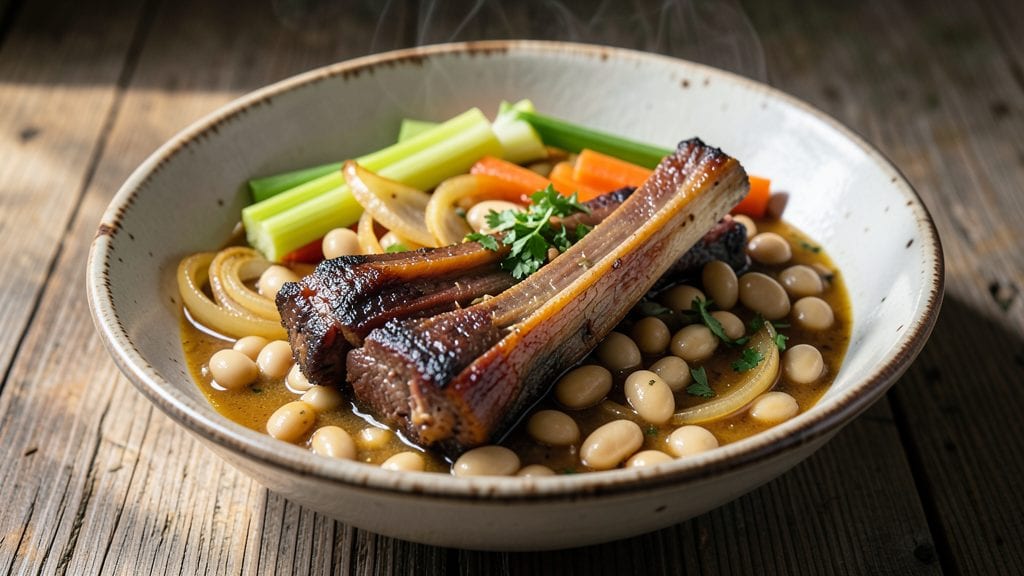
This neck bones and lima beans recipe delivers a rich, collagen-packed stew that honors Southern and Caribbean traditions while bringing deep, earthy flavors to your table. The secret lies in slow-braising the bones until the broth becomes velvety and infused with gelatinous richness—something store-bought stocks simply can’t replicate.
I’ve perfected this method over years of testing, balancing smoky spices with the natural sweetness of lima beans for a dish that’s both comforting and deeply satisfying.
The process begins with browning the bones to develop a deep, caramelized foundation for the broth, then simmering them for hours until the collagen dissolves into a luxurious, almost gravy-like consistency. Lima beans—whether fresh or dried—absorb these flavors beautifully, becoming tender yet holding their shape.
This isn’t just a stew; it’s a flavor experience that transforms tough cuts into melt-in-your-mouth perfection while delivering a protein boost from both the bones and beans.
What you’ll end up with is a smoky, collagen-rich stew that’s hearty enough for a family dinner but elegant enough for a special occasion. The aroma alone—warm spices mingling with the natural sweetness of the beans—will have everyone gathering at the table.
The best part? Leftovers only get better as the flavors deepen overnight, making this a meal worth the time and effort.
Whether you’re serving it with cornbread, over rice, or alongside roasted greens, this stew stands up to any side dish while delivering a depth of flavor that’s hard to find in everyday cooking. Let’s get started on creating a dish that’s as nourishing as it is delicious.
Ingredients for neck bones and lima beans
Sixteen ingredients transform tough neck bones into velvety stew with deep, smoky richness.
| Ingredient | Amount | Notes |
|---|---|---|
| Beef Neck Bones 🥩 | 3 lb | Raw, split for faster cooking |
| Dried Lima Beans 🌱 | 1 ½ cups | Picked over, soaked overnight |
| Yellow Onion 🧅 | 1 whole | Chopped, medium size |
| Celery Stalks 🥬 | 4 whole | Chopped, with leaves |
| Carrots | 3 medium | Peeled, chopped into chunks |
| Garlic Cloves 🧄 | 6 cloves | Peeled, smashed slightly |
| Smoked Paprika 🌶️ | 1 tbsp | High-quality for smoky depth |
| Ground Cumin 🌿 | 1 tbsp | Toasted for warmth |
| Dried Thyme 🍃 | 1 tsp | Or 1 tbsp fresh |
| Bay Leaves 🌿 | 2 whole | Fresh preferred |
| Apple Cider Vinegar 🍏 | ¼ cup | For brightness |
| Water 💧 | 8 cups | Enough to cover bones |
| Salt 🧂 | 2 tsp | Diamond Crystal preferred |
| Black Peppercorns 🌶️ | ½ tsp | Freshly cracked |
| Olive Oil 🫒 | 2 tbsp | For browning bones |
The neck bones are the heart of this dish—look for marrow-rich bones at your butcher or Costco bulk section. The more marrow, the richer your broth. Soak the lima beans overnight (or use quick-soak with boiling water) to ensure they're tender. Trader Joe's carries dried lima beans if you can't find them elsewhere. For the vegetables, fresh celery with leaves adds extra flavor, but regular celery works too. The smoked paprika should be high-quality—Penzeys or McCormick Gourmet are great choices. Toast your cumin seeds in a dry pan for 30 seconds before grinding to deepen their flavor.
No smoked paprika? Substitute 1 tsp liquid smoke plus 1 tbsp regular paprika—it won't be identical, but close. Short on time? Use canned lima beans (drained and rinsed), but they won't have the same texture. The apple cider vinegar adds brightness—substitute lemon juice if that's what you have. For the vegetables, swap carrots for sweet potatoes if you prefer. The bay leaves? Fresh is ideal, but dried works at half the amount. If you're using dried beans, pick through them carefully—any small stones or debris will ruin the dish.
This stew only gets better with time—plan to make it a day ahead if possible. Store in the fridge for up to 5 days, or freeze portions for 3 months. The broth thickens as it cools, so add a splash of water when reheating. For extra richness, skim off the fat before serving. The bones will be so tender they'll practically fall apart—save some for broth if you're making a big batch. Leftovers reheat beautifully—just add a splash of water or broth to loosen it up.
Why You'll Love This Recipe
- One-Pot Magic: I swear by this—just toss the neck bones, beans, and chopped veggies into a pot, cover with water, and let it slow-simmer. No fancy prep, no last-minute scrambling. The bones practically melt into flavor while you do whatever else needs doing.
- Deep, Rich Satisfaction: That long simmer transforms tough neck bones into fall-off-the-bone goodness, and the lima beans? Buttery and tender with just a hint of earthiness. Honestly, the first bite makes me forget it’s a weeknight dinner.
- Leftovers That Beg for More: This dish only gets better the next day—like a cozy hug in a bowl. I make a double batch on Sundays, and by Wednesday, it’s still the star of lunch. (Yes, even on a Tuesday night.)
- Budget-Friendly Powerhouse: Neck bones and dried beans stretch into a meal that feeds four for less than $10. Between us, this is how I keep groceries affordable without sacrificing flavor. Plus, the veggies add color and crunch for pennies.
Step-by-step instructions for smoky collagen-rich beef neck bone stew
Here's the method that transforms tough neck bones into a rich, flavorful foundation for this hearty stew.
Prepare the Bones and Vegetables for Maximum Flavor Extraction
Begin by splitting the 3 lb beef neck bones lengthwise with a heavy cleaver or meat mallet. This creates more surface area for flavor infusion and speeds up the cooking process. Pat the bones completely dry with paper towels—this helps them brown properly and prevents the olive oil from steaming instead of browning.
While the bones rest, chop the 1 whole yellow onion into even ½-inch dice, the 4 whole celery stalks (including leaves) into ¼-inch pieces, and the 3 medium carrots into ½-inch chunks. Peel and smash the 6 cloves garlic slightly with the side of your knife to release their aroma without mincing them. Set all vegetables aside in separate piles for organized cooking.
Develop Deep Flavor Through Browning and Layered Seasoning
Heat a large Dutch oven over medium-high heat until it's very hot. Add the 2 tbsp olive oil and swirl to coat the bottom evenly. Working in batches if needed, add the split neck bones in a single layer and sear for 3-4 minutes per side until they develop a deep golden-brown crust. This step is crucial—it builds the foundation for the stew's rich flavor.
Once all bones are browned, remove them from the pot and set aside. In the same Dutch oven, add the chopped yellow onion, celery, and carrots. Sauté for 5 minutes until the vegetables soften slightly and begin to release their moisture. Add the 6 smashed garlic cloves and cook for 30 seconds until fragrant—don't let them burn, as this creates bitterness.
Return the browned bones to the pot and sprinkle evenly with the 1 tbsp smoked paprika, 1 tbsp ground cumin, 1 tsp dried thyme, 2 whole bay leaves, and 2 tsp salt. Toss everything together to coat the bones and vegetables thoroughly with the spices. This creates a flavorful crust that will infuse into the broth as it simmers.
Build the Collagen-Rich Broth with Proper Hydration and Acid Balance
Pour in the 8 cups water and add the 0.25 cup apple cider vinegar. The vinegar brightens the flavors and helps tenderize the bones by breaking down collagen. Bring the mixture to a gentle boil over high heat, then immediately reduce to a low simmer. Skim off any foam or impurities that rise to the surface during the first 10 minutes of simmering—this ensures a clear, clean broth.
Add the 1.5 cups dried lima beans (rinsed if not pre-soaked) and the 0.5 tsp freshly cracked black peppercorns to the pot. The beans will absorb moisture and begin to soften as the stew simmers. Cover the pot and maintain a gentle simmer (small bubbles occasionally breaking the surface) for 3 hours. This slow cooking time is essential—it allows the collagen in the bones to break down into gelatin, creating a naturally thick, velvety stew.
Finish with Tender Beans and Perfect Texture
After 3 hours, check the tenderness of the beans by pressing one with your finger—it should be soft but still hold its shape. If the beans need more time, continue simmering for another 30-60 minutes. The stew should have reduced slightly, with the bones nearly falling apart when probed with a fork. This indicates maximum collagen extraction and flavor development.
Remove the 2 whole bay leaves from the stew and discard them. Taste the broth and adjust seasoning if needed—you may need to add a pinch more salt or black peppercorns to balance the flavors. The stew should have a deep, smoky aroma with earthy notes from the lima beans and sweetness from the carrots and onions. Serve immediately with crusty bread or over rice to enjoy the full richness of this collagen-packed stew.
Pro Tips For Making Neck Bones And Lima Beans
- Parboil Lima Beans First: Skip the soak—just boil dried limas for 10 minutes before adding to the pot. This cuts down on cooking time later and keeps them from turning mushy. I used to ignore this, and my beans always ended up either rock-hard or falling apart.
- Sear Bones in Batches: Crowd the pan, and you’ll steam instead of brown. Work in two batches over medium-high heat until deep caramelization forms—this builds flavor that won’t dissolve in the broth. After burning two batches, I finally invested in a bigger skillet.
- Char the Veggies: Toss chopped onions, celery, and carrots in the hot pot after the bones come out—let them darken for 5 minutes before adding liquid. The smoky edge cuts through the richness of the neck bones. Sounds counterintuitive, but it works.
- Simmer Covered, Then Uncover: Start with a lid for the first 2 hours to break down collagen, then remove it for the last 30 minutes to thicken the sauce. Skipping this step leaves you with a watery mess. Trust me, the difference is noticeable.
Dietary considerations for this recipe
Protein-Packed Powerhouse
This stew delivers a dual-protein punch with beef neck bones and lima beans, making it ideal for muscle recovery and satiety. The bones provide collagen-rich gelatin (about 15-20g per serving), while lima beans contribute 15g plant-based protein per cup—perfect for meat-eaters and vegetarians alike.
The combination creates a complete amino acid profile, supporting muscle repair and immune function. 💪
Gluten-Free Foundation
The recipe is naturally gluten-free since it relies on simple ingredients like beef, beans, and vegetables. Just ensure your smoked paprika and spices are certified gluten-free if you have celiac disease or sensitivity.
I recommend Penzeys or McCormick Gourmet brands, which clearly label their products. Always double-check bean packaging too—some brands process lima beans in shared facilities with gluten-containing ingredients.
Low-Carb Adaptation
For a lower-carb version, reduce the lima beans to ½ cup and add 1 cup chopped kale or spinach during the last 30 minutes of cooking. This maintains the stew's heartiness while cutting carbs by ~40%.
The beans still provide fiber and protein, while the greens add nutrients without significant carb impact. Serve with cauliflower rice instead of traditional sides for a keto-friendly meal.
Vegetarian Substitution
Swap the beef bones for mushroom stems (about 2 cups chopped) and 1 cup extra-firm tofu (pressed and cubed) for a vegetarian adaptation. Simmer the mushrooms and tofu with the same spices and vegetables for 2 hours instead of 3 to develop deep umami flavors.
The texture won't be identical, but the dish remains rich and satisfying. Add 1 tbsp soy sauce or miso paste to enhance savory notes.
Allergen-Friendly Notes
This recipe is nut-free, dairy-free, and egg-free, making it safe for common allergies. For soy concerns, avoid the vegetarian substitution above. If you're sensitive to nightshades, omit the smoked paprika and replace it with 1 tsp liquid smoke plus 1 tbsp regular paprika.
Always check bean labels for potential cross-contamination warnings if allergies are severe.
Meal Prep Flexibility
The stew's ingredients are freezer-friendly, letting you prep components ahead. Brown the bones and sauté vegetables up to 3 days in advance—store separately in airtight containers. When ready to cook, combine everything and simmer as directed.
The beans can be soaked overnight in the fridge for up to 2 days before cooking. This makes the recipe perfect for batch cooking and grab-and-go meals during busy weeks. 💡
Nutrition facts
Frequently asked questions
Why do I need to split the neck bones for this recipe?
Splitting the bones creates more surface area, which helps extract maximum flavor and collagen during simmering. This step also speeds up cooking time by 30-45 minutes compared to using whole bones. The exposed marrow adds rich, velvety depth to your stew's broth.
Can I use canned lima beans instead of dried?
Yes, but texture will differ. Canned beans cook faster and stay firmer, while dried beans develop a creamier consistency. If using canned, drain and rinse thoroughly, then add them during the last 30 minutes of simmering. For best results, use dried beans—they absorb flavors better and create a more traditional stew texture.
How do I know when the stew is done?
The beans should be tender but still hold their shape when pressed with a fork (about 3 hours of simmering). The bones should be nearly falling apart when probed. The broth will have thickened noticeably, with a deep, smoky aroma. If the beans need more time, add 1 cup water and simmer another 30 minutes.
What if I don't have smoked paprika?
Mix 1 tsp liquid smoke with 1 tbsp regular paprika for a close substitute. The flavor won't be identical, but it'll add smoky depth. For a different approach, try ½ tsp chipotle powder (adjust to taste) or a pinch of cayenne for heat. Always taste before serving!
Can I make this recipe in a slow cooker?
Brown the bones and sauté vegetables as directed, then transfer everything to a 6-quart slow cooker. Add all remaining ingredients and cook on LOW for 8 hours or HIGH for 5 hours. The collagen will still break down beautifully, though the texture may be slightly less gelatinous. Skim excess fat before serving.