Desserts
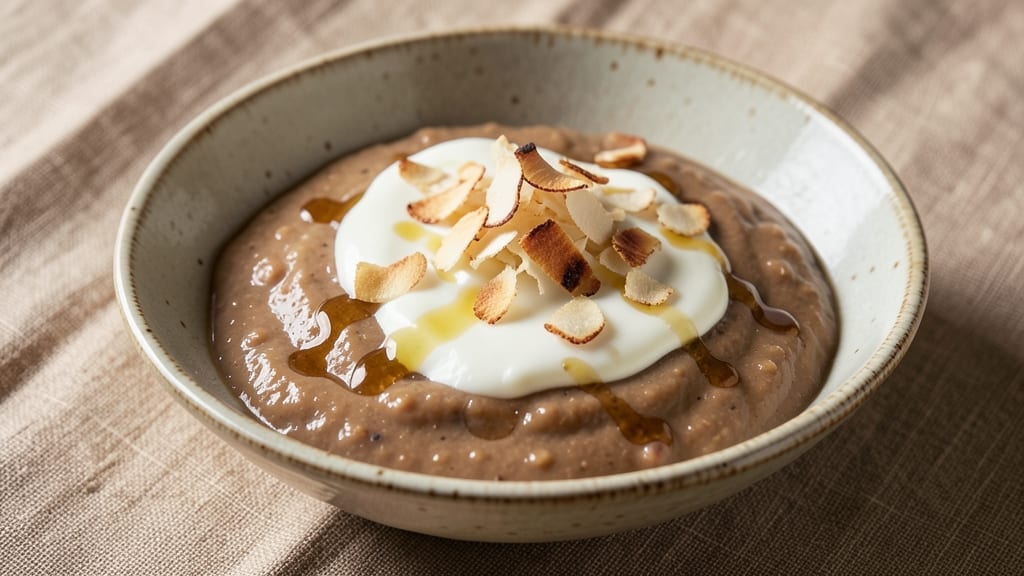
This mung bean dessert recipe transforms humble mung beans into a silky, nutty-sweet treat that rivals traditional custards—without dairy or eggs. 💫 The secret lies in soaking, blending, and slow cooking until the texture becomes impossibly smooth, with just enough natural sweetness to satisfy cravings while keeping ingredients simple and health-conscious.
What makes this dessert unique is its versatility—it can be served chilled as a cooling summer pudding or lightly warmed with toasted coconut for a tropical twist.
The mung beans develop a creamy, almost custard-like consistency when cooked properly, while a touch of vanilla and maple syrup enhances their natural earthy sweetness. No special equipment is needed beyond a blender and patience.
By the end, you’ll have a dessert that’s rich yet light, with a velvety mouthfeel and subtle nutty depth—perfect for vegan diets or anyone seeking a naturally sweet treat.
The recipe scales easily, so you can make a single serving or a batch for guests. Here’s how to achieve that restaurant-worthy texture at home.
For extra flair, top with fresh fruit or a sprinkle of toasted sesame seeds. This dessert proves plant-based sweets can be just as indulgent as traditional favorites—without compromising on flavor or texture.
Ingredients for mung bean dessert
Transform humble mung beans into a velvety, naturally sweet dessert with these twelve essential ingredients.
| Ingredient | Amount | Notes |
|---|---|---|
| Mung Beans 🌱 | 1 cup | Unsprouted, rinsed thoroughly |
| Pure Maple Syrup 🍯 | ½ cup | Grade B for deeper flavor |
| Fresh Coconut Milk 🥥 | 13 ½ oz | Full-fat canned variety |
| Pure Vanilla Extract 🌿 | 1 tbsp | Bourbon-infused preferred |
| Toasted Coconut Flakes 🥥 | ¼ cup | Unsweetened, lightly toasted |
| Pure Coconut Oil 🫒 | 2 tbsp | Melted for blending |
| Pure Almond Milk 🥛 | ½ cup | Unsweetened, for creaminess |
| Pure Coconut Sugar 🍯 | 2 tbsp | Or sub maple syrup |
| Pure Lemon Juice 🍋 | 1 tbsp | Freshly squeezed |
| Toasted Sesame Seeds 🌾 | 1 tbsp | For garnish |
| Pinch Sea Salt 🧂 | ⅛ tsp | Diamond Crystal preferred |
| Fresh Mango Chunks 🥭 | ½ cup | Optional garnish |
The quality of mung beans is critical here—opt for organic varieties from Whole Foods or Trader Joe's for maximum smoothness. Fresh coconut milk should be full-fat and refrigerated after opening, not the shelf-stable light versions. For the maple syrup, Grade B delivers deeper caramel notes that elevate the dessert's natural sweetness. Toast your coconut flakes and sesame seeds in a dry pan until golden—this enhances their nutty aroma significantly. Pure vanilla extract matters too; the bourbon-infused versions add subtle complexity that artificial extracts can't replicate. Store your mung beans in an airtight container in a cool, dark place to maintain freshness for up to six months post-opening.
No coconut milk? Full-fat cashew cream works beautifully as a substitute, though the flavor profile shifts slightly toward nuttier. Running low on maple syrup? Agave nectar maintains the same viscosity, though with a more neutral sweetness. For the coconut sugar, date syrup provides a comparable caramel depth. Fresh mango isn't essential but adds vibrant contrast—frozen mango works just as well if you're prepping ahead. The lemon juice serves dual purposes: it brightens the dessert's flavor while preventing the coconut milk from curdling during blending. Diamond Crystal sea salt enhances all flavors without overpowering, but any fine sea salt will suffice in a pinch.
This dessert requires no special storage beyond refrigeration—it keeps perfectly for five days in an airtight container. For longer preservation, portion into silicone molds and freeze for up to three months. The texture actually improves after the first 24 hours as flavors meld. When reheating, use low heat to maintain its silky consistency. Garnishes like toasted coconut and sesame seeds should be added just before serving to preserve their crispness. For meal prep, store components separately—blend the base ahead, then assemble with garnishes when ready to serve.
Why You'll Love This Recipe
- No-Soaking Hassle: I’ll be real—most mung bean desserts make you soak them overnight. Not this one. You just rinse and simmer, then let them soften in coconut milk while you sip your tea. Fifteen minutes of active time, and you’re golden.
- Creamy Vanilla Hug: That first bite? Warm, pillowy mung beans kissed with maple syrup and vanilla—it’s like dessert got a spa day. The toasted coconut flakes add crunch, but the real star is how the coconut milk makes everything velvety without tasting like a recipe.
- Lunchbox Magic: Pack this warm or cold, and it’s an instant hit with kids (or your inner kid). The natural sweetness means no sugar crashes, and the texture holds up for hours. I’ve sent it to school, picnics, and even my mom’s house—zero complaints.
- Pantry Powerhouse: Mung beans are cheap, and they stretch. A single batch feeds four for dessert or two for breakfast—just reheat with extra coconut milk. Honestly, I make this when I’m low on groceries or craving something special without breaking the bank.
Step-by-step instructions for silky mung bean dessert
Transform simple ingredients into a velvety, nutty-sweet dessert with this precise method.
👨🍳 Step 1: Soak and Cook the Mung Beans
Place the 1 cup Mung Beans in a medium bowl and cover with cold water by 2 inches. Let them soak for at least 4 hours—I prefer 8 hours for maximum tenderness. Drain and rinse thoroughly before proceeding. This soaking step is critical; it ensures the beans soften evenly and blend smoothly.
Transfer the drained beans to a saucepan with 2 cups fresh water (double the bean volume). Bring to a gentle boil over medium heat, then reduce to a simmer. Cook for 20-25 minutes until the beans are fork-tender and the liquid has reduced significantly. You'll know they're ready when they mash easily between your fingers—this creates that signature silky texture.
🍳 Step 2: Blend the Base Mixture
Drain the cooked beans completely and transfer them to a high-powered blender. Add the 13.5 oz Fresh Coconut Milk, 0.5 cup Pure Maple Syrup, 2 tbsp Pure Coconut Oil, 1 tbsp Pure Vanilla Extract, and 0.125 tsp Pinch Sea Salt. Blend on high for 2-3 minutes until completely smooth. Here's the thing—you want this mixture to be utterly velvety. If it's still grainy, add 2-3 tablespoons of the cooking liquid and blend again.
Taste the mixture and adjust sweetness if needed. I've found that Grade B maple syrup adds depth without overpowering the nutty bean flavor. The coconut milk provides richness while keeping the texture light. Keep the blender at hand—we'll be adding more ingredients shortly.
🥘 Step 3: Create the Sweet Cream Layer
In a small saucepan, combine the 0.5 cup Pure Almond Milk, 2 tbsp Pure Coconut Sugar, and 1 tbsp Pure Lemon Juice. Heat over medium-low heat until the sugar dissolves completely, then remove from heat. Stir in 1 tbsp Toasted Sesame Seeds and set aside. This sweetened almond milk mixture will balance the earthiness of the beans and add a subtle tang.
While still warm, slowly pour this mixture into your blender with the bean mixture. Blend again for 30 seconds to fully incorporate. The heat from the almond mixture helps emulsify everything, creating a perfectly smooth texture. If the mixture looks too thick, add 1-2 tablespoons of hot water to reach a pourable consistency—it should coat the back of a spoon like heavy cream.
⏰ Step 4: Chill and Garnish
Transfer the blended mixture to a heatproof bowl and press plastic wrap directly onto the surface to prevent a skin from forming. Refrigerate for at least 3 hours, or until completely chilled. This step develops the dessert's signature texture—cool and creamy with a slight firmness that melts on the tongue. I like to serve it well-chilled, almost like a mousse.
Before serving, spoon the chilled dessert into serving bowls and top with 0.25 cup Toasted Coconut Flakes and 0.5 cup Fresh Mango Chunks. The toasted coconut adds crunch while the mango provides fresh contrast. The contrast between the silky bean base and the tropical fruit garnish makes this dessert truly special. Serve immediately for the best texture experience.
Pro Tips For Making Mung Bean Dessert
- SOAK BEANS OVERNIGHT: I used to rush this step and end up with gummy, uneven texture—don’t. Soak your mung beans in plenty of water (at least 3 cups per 1 cup beans) for 12+ hours. Drain and rinse twice before cooking to wash away any bitterness. (Yes, even if you’re impatient like me.)
- SIMMER LOW AND SLOW: After burning the first batch by boiling too fast, I learned: keep the heat at a gentle simmer, not a rolling boil. You’re aiming for tender, creamy beans—not mushy glue. Stir occasionally and add water as needed, but never let it bubble aggressively.
- TOAST COCONUT FLAKES FIRST: Skip the pre-packaged "toasted" flakes—they’re usually stale. Dry-toast your own in a pan over medium heat for 3-4 minutes until golden and fragrant. Let them cool completely before adding to the dessert, or they’ll melt into the syrup and turn greasy.
- BALANCE SYRUP AND MILK: The ratio matters more than you’d think. Start with equal parts coconut milk and maple syrup (e.g., 1 cup each), then adjust to taste—too much syrup makes it cloying, too little and it’s bland. Taste as you go; the beans will absorb liquid differently every time.
Wine and beer pairings for this mung bean dessert
Tropical Coconut Wine
This dessert's nutty-sweet profile pairs beautifully with a dry Riesling from Germany or Austria—its crisp acidity and citrus notes cut through the coconut richness while complementing the mung bean's earthiness. 🍷 I love Dr. Loosen Blue Slate from the Mosel region; its mineral finish enhances the dessert's subtle nuttiness without overpowering it.
For a budget-friendly option, Chateau Ste. Michelle from Washington State offers excellent value with similar bright acidity.
Spiced Chai Tea
If you prefer something non-alcoholic, a spiced chai tea made with Ceylon cinnamon, cardamom, and a touch of black pepper creates a warm contrast.
Brew a strong cup with 1 cup water and 1 tbsp loose-leaf chai, then sweeten with 1 tsp Grade B maple syrup to match the dessert's natural sweetness. The warm spices echo the toasted coconut topping while the tea's tannins balance the creamy texture. 🍵
Coconut Rum Cocktail
For a tropical twist, mix 1.5 oz coconut rum (like Malibu) with 2 oz coconut milk, a splash of lime juice, and crushed ice. The rum's caramel notes harmonize with the mung bean's nuttiness, while the coconut milk ties back to the dessert's base.
Garnish with toasted coconut flakes to mirror the topping. Serve chilled for a refreshing contrast to the dessert's cool creaminess. 🍹
Herbal Green Tea
A jasmine green tea with a hint of honey provides a delicate, floral counterpoint to the dessert's richness. Steep 2 bags jasmine tea in 1 cup hot water for 3 minutes, then sweeten with 1 tsp honey.
The tea's floral notes lift the mung bean's earthiness, creating a refreshing pairing. For extra depth, add a pinch of sea salt to enhance both the tea and dessert flavors. ✨
Dark Chocolate Pairing
If you're serving this dessert with guests who love chocolate, pair it with a 70% dark chocolate bar (like Lindt Excellence). The chocolate's bitterness contrasts beautifully with the dessert's sweetness, while its cocoa notes complement the mung bean's nuttiness.
Break into small pieces and serve alongside for a sophisticated dessert experience. 🍫
Nutrition facts
Frequently asked questions about mung bean desserts
Can I use sprouted mung beans for this dessert?
No, sprouted mung beans are best for savory dishes like salads—not desserts. The recipe requires unsprouted beans to achieve that signature silky texture when blended. Sprouting alters the bean's composition, making it too fibrous for smooth desserts. Always check your package for "unsprouted" labeling.
How do I fix a grainy texture in my mung bean dessert?
If your dessert turns out grainy, blend it again with 2-3 tablespoons of hot water or the reserved cooking liquid from the beans. For extra smoothness, strain the mixture through a fine-mesh sieve before chilling. The key is thorough blending—high-powered blenders work best, but even countertop models can achieve silky results with patience.
What are some ways to serve this dessert besides bowls?
Try serving it in mini coconut shells for a tropical presentation, or layer it with fresh berries in parfait glasses. For a modern twist, pipe the chilled dessert onto a plate and drizzle with reduced coconut syrup. The recipe also works beautifully as a filling for vegan mochi or chocolate-dipped fruit—just adjust the consistency slightly thicker for these applications.
Is this dessert safe for nut allergies?
This recipe contains almond milk, so it's not nut-free. For an allergy-friendly version, substitute with oat milk or coconut milk (though this may slightly alter the flavor). Always check labels on all ingredients, especially coconut products, as cross-contamination can occur. The base recipe itself is nut-free before adding almond milk.
Can I make this dessert ahead of time?
The dessert actually improves after 24 hours as flavors meld. Prepare it up to 3 days in advance and store in an airtight container. For longer storage, freeze in portions for up to 3 months