
Sauces & Condiments
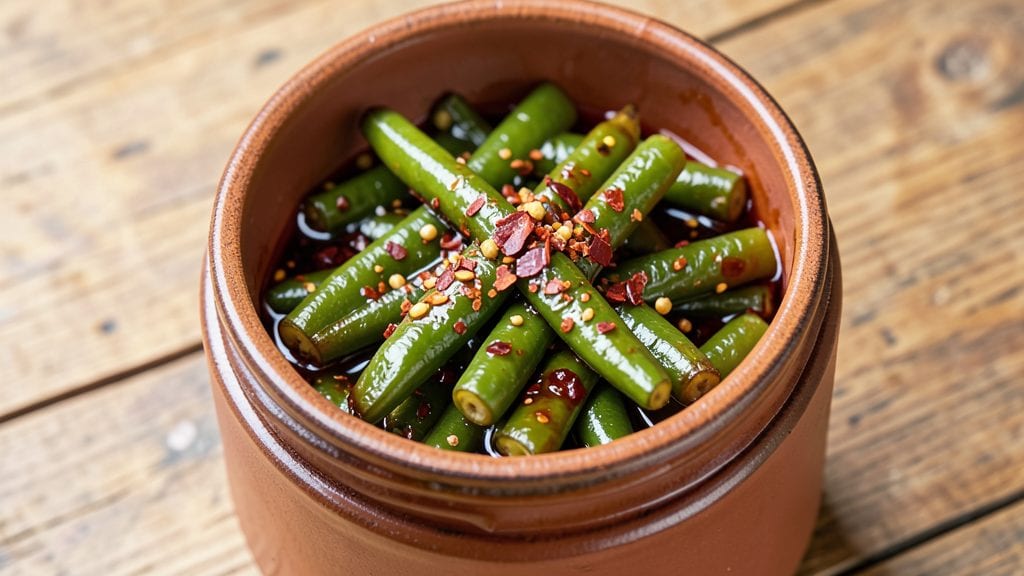
Creating a French beans pickle recipe that delivers bold, tangy crunch in just 10 minutes of active prep time is all about balancing sharp spices with vinegar’s bite.
This traditional method transforms simple green beans into a vibrant condiment perfect for sandwiches, snacks, or pairing with meals—packed with heat and texture that lasts for months. The key lies in sterilizing jars properly and crafting a spiced brine that penetrates every bean, ensuring each bite delivers that signature zing.
What sets this recipe apart is its versatility—whether you prefer the fiery kick of Indian-style mustard seeds and red chilies or a Mediterranean twist with garlic and oregano, the technique remains the same.
The process is straightforward: blanch the beans briefly to soften them, then submerge them in a simmering vinegar-spice mixture that infuses flavor deep into the texture. This method preserves the beans’ natural crunch while adding layers of complexity through slow infusion.
The result is a jar of crisp, zesty French beans that stays fresh for up to 6 months when stored in a cool, dark place. The pickling liquid—tangy, aromatic, and slightly spicy—coats each bean perfectly, making them irresistibly crunchy.
Whether you’re serving them as a side, stuffing them into wraps, or using them as a topping for pizzas, these pickled beans elevate every dish they touch with their vibrant flavor and satisfying texture.
For those who love customization, adjust the spice blend to suit your heat tolerance or regional preferences. The beauty of this recipe is its adaptability—once you master the basics, the possibilities are endless. Let’s get started on creating your own batch of restaurant-quality pickled beans at home.
Ingredients for french beans pickle
Transform simple green beans into vibrant, zesty crunch with these 14 essential ingredients.
| Ingredient | Amount | Notes |
|---|---|---|
| Fresh Green French Beans 🌿 | 2 lbs | Trimmed, uniform length |
| White Vinegar 💧 | 2 cups | Distilled, 5% acidity |
| Water 💧 | 2 cups | Filtered preferred |
| Granulated Sugar 🍚 | 1 cup | White or raw |
| Mustard Seeds 🌶️ | 1 tbsp | Whole, yellow preferred |
| Red Chili Flakes 🌶️ | 1 ½ tbsp | Adjust for heat preference |
| Garlic Cloves 🧄 | 6 cloves | Minced, fresh preferred |
| Turmeric Powder 🌿 | 1 tsp | Freshly ground preferred |
| Salt 🧂 | 1 ½ tbsp | Diamond Crystal kosher |
| Black Peppercorns 🌶️ | 1 tsp | Crushed, freshly ground |
| Fresh Fenugreek Leaves 🌿 | ½ cup | Chopped, optional garnish |
| Glass Mason Jars 🍶 | 2 whole | Pint-sized, sterilized |
| Lemon Juice 🍋 | 1 tbsp | Freshly squeezed |
| Asafoetida Powder 🌶️ | ¼ tsp | Optional, for depth |
The quality of your beans and vinegar makes all the difference. Fresh, crisp French beans from local markets or organic farms yield the best texture—avoid wilted or rubbery varieties. For vinegar, distilled white vinegar with 5% acidity ensures proper preservation; brands like Heinz or Bragg are reliable choices. Mustard seeds should be yellow and whole—no powdered substitutes—as they release their signature aroma during cooking. Turmeric should be freshly ground for vibrant color and maximum flavor punch. Sterilize your pint-sized Mason jars by boiling them for 10 minutes to prevent spoilage.
No mustard seeds? Substitute with 1 tsp ground mustard seed, though texture differs. Short on fenugreek? Fresh cilantro leaves add brightness instead. For a Mediterranean twist, swap red chili flakes for 1 tbsp dried oregano plus 1 tsp red pepper flakes. The garlic can be roasted for a sweeter profile—simply wrap whole cloves in foil and bake at 400°F for 15 minutes. Asafoetida, while optional, adds a unique umami depth; if unavailable, 1/4 tsp onion powder provides a mild alternative. Always use freshly ground spices—they deliver superior flavor compared to pre-ground powders.
Store your pickled beans in a cool, dark pantry where they’ll maintain crispness for up to 6 months. The vinegar brine acts as a natural preservative, but always check for mold or off odors before consuming. For best results, use within 3 months for peak flavor and texture. Portion into smaller jars if you won’t finish the batch quickly—this minimizes exposure to air. The pickling liquid can be reused for up to 2 additional batches, though flavor intensity diminishes slightly with each use. Refrigerate opened jars for 1 month to extend freshness.
Why You'll Love This Recipe
- No Chopping Needed: I swear, the beans just need a quick wash and trim—no dicing, no fuss. That first sizzle of mustard seeds in hot oil is the only real work, and honestly? It’s the best part.
- Sweet-Tangy Magic: The vinegar and sugar balance is chef’s kiss—bright enough to cut through rich dishes but sweet enough to make you reach for seconds. Those mustard seeds? Tiny flavor bombs that pack a punch.
- Party Snack Hero: Serve it warm as a side with dosas or cold in sandwiches—it’s the ultimate crowd-pleaser. My in-laws still ask for seconds, and they’ve seen me burn toast.
- Lasts for Weeks: One batch feeds my family for days, and it only gets better with time. The flavors meld into this addictive tang—perfect for lazy mornings or when you forget to grocery shop.
Step-by-step instructions for French beans pickle
Here's the method for creating a vibrant, crunchy pickle with bold South Indian flavors.
Prepare the French Beans
Begin by trimming the ends of all 2 lbs of fresh green french beans and cutting them into 3-inch uniform lengths. This ensures even cooking and consistent texture throughout the pickle. Rinse them under cold water and drain thoroughly, then set aside in a colander.
For best results, blanch the beans in boiling water for 2 minutes, then immediately transfer them to an ice bath to stop the cooking process. This step preserves their vibrant green color and slight crunch. Drain well once again before proceeding—excess moisture will dilute the pickle's intensity.
Create the Spiced Vinegar Mixture
In a medium saucepan, combine the 2 cups white vinegar, 2 cups water, 1 cup granulated sugar, 1.5 tbsp salt, 1 tbsp mustard seeds, 1.5 tbsp red chili flakes, 1 tsp turmeric powder, and 1 tsp crushed black peppercorns. Bring this mixture to a gentle boil over medium heat, stirring continuously to dissolve the sugar completely.
Reduce the heat to low and let it simmer for 5 minutes until the flavors meld together. Here's where the magic happens: the vinegar sharpens, the spices bloom, and the sugar balances the acidity. Taste the mixture now—it should be tangy with a subtle sweetness and noticeable spice. If you added the optional 0.25 tsp asafoetida powder, now is the time to incorporate it for that unmistakable umami depth.
Add Aromatics and Finish the Pickle
Remove the simmering mixture from heat and stir in the 6 minced garlic cloves and 1 tbsp freshly squeezed lemon juice. Let the mixture steep for 5 minutes to allow the garlic to infuse its aromatic qualities. This step is crucial for developing the pickle's complex flavor profile.
Meanwhile, chop the 0.5 cup fresh fenugreek leaves finely. These leaves add a distinctive bitterness that balances the sweetness and acidity perfectly. Once the mixture has steeped, stir in the chopped fenugreek leaves and let the entire blend cool to room temperature. The color should deepen to a rich amber hue, and the scent should be intensely aromatic with notes of vinegar, spice, and garlic.
Pack and Seal the Pickle
Sterilize the 2 whole glass mason jars by boiling them in water for 10 minutes, then drain and let them dry completely. Pack the blanched french beans tightly into each jar, leaving about 1 inch of headspace at the top. Pour the cooled spiced vinegar mixture over the beans until the jars are full, ensuring each bean is completely submerged in the liquid.
Seal the jars tightly and let them sit at room temperature for 24 hours before transferring them to the refrigerator. This resting period allows the flavors to fully develop and penetrate the beans. After 24 hours, your pickle will be ready to enjoy—crunchy, tangy, and bursting with South Indian spice.
Pro Tips For Making French Beans Pickle
- Blanch Before Pickling: Drop those beans into boiling water for exactly 2 minutes—no more, no less—then shock them in ice water. This stops cooking, keeps them crisp, and prevents that sad, mushy texture that ruins the whole jar. I learned this the hard way after a batch turned into bean soup.
- Use Raw Vinegar: Skip the "cooked" vinegar—raw white vinegar has more acidity and preserves better. If you’re using a substitute like apple cider vinegar, add 1 tablespoon of lemon juice per cup to match the tang. My grandmother swore by this, and she was right: the flavor stays sharp for months.
- Don’t Crowd the Jar: Pack the beans loosely—leave at least 1 inch of headspace. Overstuffing traps air, which leads to mold or a funky smell. If you’re worried about space, blanch them first so they shrink slightly. Trust me, your future self will thank you when you open a jar that’s still crisp and bright.
- Toast Mustard Seeds First: Dry-toast the mustard seeds in a pan for 30 seconds until they pop—this deepens their flavor and prevents bitterness. Skip this, and you’ll just taste raw mustard powder. (Yes, even if you’re impatient like me, wait for those little cracks.)
Wine and beer pairings for this french beans pickle
Indian-Style Pairings
For a bold, aromatic experience, pair your French beans pickle with a dry white wine like Chenin Blanc from the Loire Valley. Its crisp acidity and subtle honey notes cut through the vinegar’s tang while complementing the mustard seeds and chili.
I love sipping a chilled glass alongside spicy South Indian dosas or idli—the wine’s minerality balances the pickle’s heat perfectly. 🍷
Beer Complements
A German-style Helles Lager (like Paulaner or Augustiner) works wonderfully with this pickle. The beer’s light malt sweetness and crisp finish cleanse your palate between bites of spicy beans.
For a craft option, try a Belgian Witbier—the coriander and citrus notes mirror the fenugreek and lemon in the pickle, creating a harmonious flavor dance. 🍺
Regional Twists
In Mediterranean-style versions of this pickle (with oregano instead of mustard seeds), a dry rosé from Provence elevates the dish. The wine’s red fruit flavors and floral notes enhance the garlic and lemon brightness.
For a spicier Indian-inspired batch, a bold red like Syrah stands up to the heat, especially when paired with tandoori chicken or dal makhani.
Non-Alcoholic Options
For a refreshing non-alcoholic match, try sparkling mint lemonade—the effervescence and sweetness contrast the pickle’s sharpness beautifully. I also enjoy hibiscus iced tea (brewed with hibiscus flowers and a touch of stevia) for its tart, floral notes that complement the vinegar and spices. 💧
Cocktail Pairings
Blend the pickle’s flavors into a cocktail by muddling 1 tbsp of the pickled beans with 2 oz gin, ½ oz lime juice, and ½ oz honey syrup. Top with tonic water and garnish with a lemon twist.
The gin’s botanicals amplify the mustard and garlic, while the tonic’s bitterness balances the sweetness. For a beer cocktail, mix 4 oz of a Belgian Witbier with 1 oz pickle juice and a splash of ginger beer—the result is a tangy, spicy sipper. 🍸
Nutrition facts
Frequently asked questions
Can I use canned or frozen French beans for this pickle?
Fresh beans yield the best texture, but you can use frozen beans if fresh aren't available. Thaw them first, then blanch for 3 minutes instead of 2 minutes to ensure they're fully cooked. Avoid canned beans—they're often pre-cooked and mushy, which ruins the crunch.
How do I adjust the spice level for kids or sensitive palates?
Reduce the red chili flakes to 0.5 tbsp and skip the mustard seeds entirely. Add 1 extra tsp of sugar to balance any remaining heat. For a milder version, use 1 tsp sweet paprika instead of chili flakes—it adds color without spice.
Can I make this pickle without vinegar?
Vinegar is essential for both preservation and tangy flavor, but you can experiment with lemon juice for a shorter-lived version (lasts 2 weeks in the fridge). Use 4 cups lemon juice plus 1 cup water instead, and add 1 extra tbsp of salt to compensate. The texture will be softer and less preserved.
Why did my pickled beans turn mushy instead of staying crisp?
Overcooking during blanching or improper sterilization causes mushiness. Always blanch for exactly 2 minutes and shock in ice water immediately. Sterilize jars by boiling for 10 minutes—don't just wash them. If using older beans, reduce blanching time to 1.5 minutes to preserve crunch.
How can I use up the extra pickling liquid?
The leftover brine is fantastic for marinades, salad dressings, or even cocktails! Use it as a base for grilled meats, toss it with potatoes for a tangy side, or mix 1/4 cup brine with 1/4 cup olive oil for a zesty salad dressing. Store unused liquid in the fridge for up to 1 month.