Main Courses
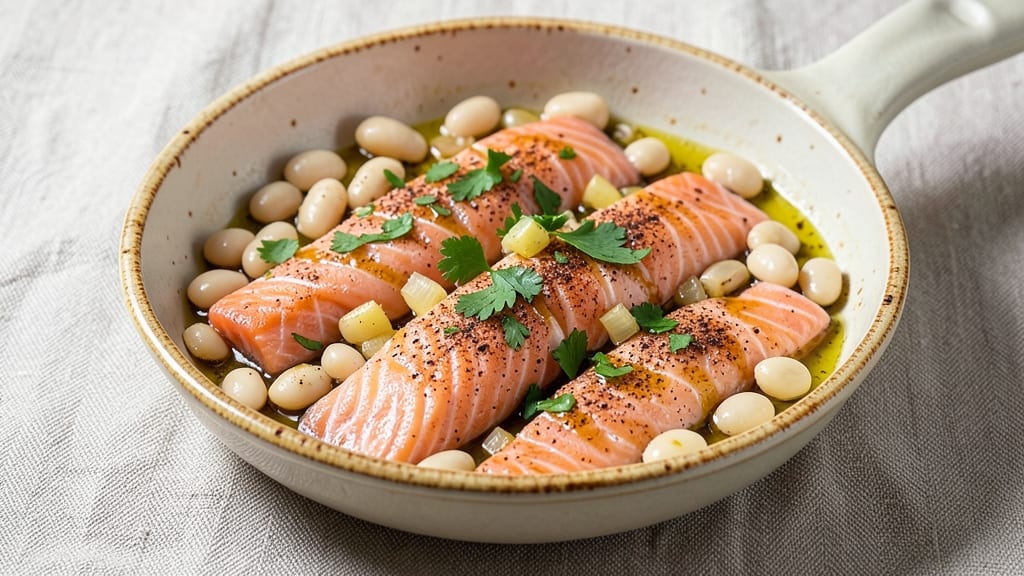
This canned salmon and beans recipe transforms pantry staples into a smoky, zesty one-pan meal that’s ready in under 30 minutes. The secret lies in balancing the natural richness of salmon with bright lemon, aromatic herbs, and a touch of smokiness that elevates simple ingredients into something restaurant-worthy.
I developed this dish after realizing how often canned salmon gets overlooked—until you know how to season it properly.
The beauty of this recipe is its simplicity: no fancy techniques, just a one-pan approach that minimizes cleanup while maximizing flavor. Draining and rinsing the salmon removes excess sodium, while warming the beans with garlic and smoked paprika builds depth before everything comes together.
The lemon-herb sauce ties it all together, cutting through the richness with a tangy, fresh finish that makes every bite feel balanced and satisfying.
What you’ll end up with is a smoky, herby, and citrusy dish that’s hearty enough for dinner but light enough for lunch. The salmon flakes effortlessly, the beans soak up all the flavors, and the sauce adds a bright, aromatic finish.
This meal is perfect for pescatarians, busy weeknights, or anyone looking to stretch ingredients without sacrificing taste.
Pair it with a simple side of steamed greens or crusty bread to round out the plate. The recipe scales easily—double it for leftovers or halve it for a single serving. Let’s get cooking!
Ingredients for canned salmon and beans
Pantry staples meet restaurant-quality seasoning in this effortless one-pan salmon and beans dish.
| Ingredient | Amount | Notes |
|---|---|---|
| Canned Pink Salmon 🐟 | 2 cans | High-quality, drained and rinsed thoroughly |
| Canned White Beans 🥫 | 2 cans | Great Northern or cannellini preferred |
| Extra-Virgin Olive Oil 🫒 | 2 tbsp | For sautéing garlic and onions |
| Yellow Onion 🧅 | 1 whole | Diced finely for even cooking |
| Garlic Cloves 🧄 | 4 cloves | Minced for aromatic depth |
| Smoked Paprika 🌶️ | 1 tbsp | For authentic smoky flavor |
| Fresh Lemon Juice 🍋 | 3 tbsp | Freshly squeezed for brightness |
| Fresh Dill 🌿 | ¼ cup | Chopped finely for herby freshness |
| Fresh Parsley 🌿 | 0.15 cup | Chopped for vibrant finish |
| Lemon Zest 🍋 | 1 tsp | For aromatic complexity |
| Dried Thyme 🌿 | ½ tsp | For earthy undertones |
| Kosher Salt 🧂 | 1 tsp | Diamond Crystal preferred |
| Ground Black Pepper 🌶️ | ½ tsp | Freshly ground for optimal flavor |
| Red Wine Vinegar 🍷 | 1 tbsp | For tangy balance |
| Fresh Chives 🌿 | 2 tbsp | Chopped for garnish |
The salmon selection is critical—opt for high-quality canned salmon like Wild Planet or Vital Choice brands, which offer superior texture and flavor. Draining and rinsing removes excess sodium while preserving the delicate flakiness. For the beans, Great Northern or cannellini varieties hold their shape best, though any white bean works. The smoked paprika should be labeled 'smoked' rather than 'sweet'—Penzeys or Gourmet Garden carry excellent options. Fresh herbs are non-negotiable here; even if you're using dried thyme, the dill and parsley must be fresh to achieve that bright, aromatic finish.
No smoked paprika? Substitute liquid smoke at one-quarter teaspoon, though the flavor profile shifts slightly. Short on fresh dill? Use 1 tablespoon dried dill, but reduce the parsley by half to maintain balance. For a tangier profile, white wine vinegar works in place of red wine vinegar. The beans can be swapped for chickpeas, though texture will differ slightly. If you're using canned beans, always rinse them—even the 'no salt added' varieties contain residual sodium that can overpower the delicate salmon flavor. The lemon zest can be omitted if you're short on time, but the fresh lemon juice is essential for that bright, citrusy finish.
This dish reheats beautifully—simply warm through in a skillet with a splash of water or broth to restore moisture. Store leftovers in an airtight container for up to 4 days in the refrigerator, though the flavors deepen overnight. For longer storage, freeze portions for up to 3 months. The herbs and lemon juice can be prepped ahead and stored separately, then combined just before serving. The salmon and beans can be sautéed in advance and held at room temperature for up to 2 hours before adding the sauce, making this an ideal make-ahead meal for busy weeknights.
Why You'll Love This Recipe
- Pantry Powerhouse: I swear by this recipe when my fridge is bare—just open cans, a drizzle of olive oil, and 15 minutes later, you’ve got a meal that tastes like it took hours. No fresh ingredients needed, no last-minute grocery runs.
- Umami Bomb: That pink salmon? Rich, briny, and packed with flavor without any extra work. When you sauté it with onions and garlic in olive oil until the edges get just a little crispy, it’s like a tiny flavor explosion in every bite—savory, slightly sweet, and impossible to stop eating.
- Lunchbox Hero: Between us, this is my go-to for meal prep. Toss it with a little lemon juice and fresh herbs, pack it in containers, and it keeps for days. Honestly, I’ve eaten this cold from the fridge on busy mornings, and it’s still delicious—no sad, soggy sandwiches here.
- Budget Win: A single can of salmon and a can of beans feed four people for under $10. That’s a protein-packed, filling dinner that won’t break the bank, especially when you’re stretching it into leftovers for lunches or even a quick pasta add-in later in the week.
Step-by-step instructions for smoky lemon herb one-pan meal
A simple yet sophisticated dish that transforms pantry staples into a vibrant, aromatic meal.
Sauté Aromatics Until Fragrant
Heat the 2 tablespoons extra-virgin olive oil in a large oven-safe skillet over medium heat. Add the 1 whole yellow onion, diced finely, and cook for 5-6 minutes until softened and translucent. This foundational step develops the base flavor—don't rush it.
Add the 4 minced garlic cloves and 1 tablespoon smoked paprika, stirring constantly for 30 seconds until the garlic releases its aroma and the paprika deepens in color. The skillet should smell rich and earthy—this is your signal to proceed. Remove the skillet from heat temporarily to prevent burning.
Combine Salmon and Beans
Drain and rinse the 2 cans canned pink salmon and 2 cans canned white beans thoroughly under cold water to remove excess sodium. Add these to the skillet, breaking up any large salmon chunks with a wooden spoon. Stir to combine with the sautéed aromatics.
Return the skillet to medium heat and cook for 3-4 minutes, allowing the salmon to warm through and absorb the smoky flavors. The mixture should look cohesive, with the beans and salmon evenly distributed. This step ensures everything melds together without overcooking the delicate salmon.
Season and Simmer
Add the 3 tablespoons fresh lemon juice, 1 teaspoon lemon zest, 0.5 teaspoon dried thyme, 1 teaspoon kosher salt, and 0.5 teaspoon ground black pepper to the skillet. Stir well to distribute the seasoning evenly. The lemon juice will brighten the dish, while the thyme and zest add depth.
Pour in the 1 tablespoon red wine vinegar and 0.25 cup chopped fresh dill, then simmer for 5 minutes over medium-low heat. The mixture should thicken slightly, and the lemon and vinegar will create a tangy contrast to the richness of the salmon and beans. Taste and adjust seasoning if needed—this is where balance matters most.
Finish and Garnish
Transfer the skillet to a 375°F preheated oven and bake for 10-12 minutes until the edges are lightly golden and the flavors have melded. The oven finish enhances the smoky notes and ensures everything is heated through without drying out.
Remove from the oven and stir in the 0.15 cup chopped fresh parsley and 2 tablespoons chopped fresh chives. The herbs add a final burst of freshness, cutting through the richness. Serve immediately, garnished with an extra sprinkle of lemon zest if desired.
Pro Tips For Making Canned Salmon And Beans
- Drain and Rinse Salmon: Canned salmon’s oils are rich but can overpower the dish if left in. Drain the salmon, then rinse it under cold water—this removes excess salt and keeps the flavors balanced without sacrificing texture.
- Sauté Onions Low and Slow: I used to rush this and end up with bitter, caramelized bits instead of sweet, tender onions. Cook them over medium-low heat for 8–10 minutes, stirring occasionally, until they’re soft and translucent—not golden.
- Crush Beans Halfway: Whole beans add texture, but crushing half of them releases more starch and thickens the sauce. Use a fork or potato masher on about half the can—just enough to blend them into the mixture without turning it into a puree.
- Finish with Lemon Zest: Dry, canned salmon can taste flat. At the end, add a pinch of lemon zest (or a squeeze of juice) to brighten the flavors and cut through the richness of the olive oil. It’s the one thing that makes this dish feel fresh.
Essential equipment for this dish
One-Pan Skillet
This 12-inch cast-iron skillet from Lodge is my go-to for this recipe—its heavy gauge retains heat evenly while allowing you to transition from stovetop to oven seamlessly. The sloped sides make stirring and combining ingredients effortless, and the natural seasoning develops a nonstick surface over time.
If you don’t own cast iron, a stainless steel skillet with a glass lid works too, though it may require slightly more oil to prevent sticking. 🔥
Wooden Spoon
A heat-resistant wooden spoon (I use OXO Good Grips) is essential for gently breaking up salmon chunks and stirring the mixture without scratching your skillet. Avoid metal utensils during the sautéing phase—they can cause hot spots and burn the garlic or onions.
The wooden spoon’s flexibility also helps scrape up any flavorful bits stuck to the bottom, ensuring nothing goes to waste.
Fine-Mesh Strainer
I can’t stress enough how important a fine-mesh strainer is for rinsing canned salmon and beans. The OXO Good Grips Collapsible Strainer is my favorite—it’s sturdy, easy to clean, and fits perfectly over the sink.
Rinsing removes excess sodium and any residual canning liquid, which can make the dish taste overly briny. Give the salmon and beans a thorough rinse under cold water before adding them to the skillet.
Microplane Zester
A Microplane is the only tool I trust for lemon zest—it yields fine, even strips without including the bitter pith. The OXO Good Grips Microplane is affordable and durable, and it’s small enough to store in a drawer but powerful enough to handle citrus, ginger, and even hard cheeses.
For this recipe, the zest adds aromatic depth that no pre-grated substitute can match. 🍋
Tongs for Garnish
After the dish comes out of the oven, I use kitchen tongs (like OXO Good Grips) to gently fold in the fresh parsley and chives. This keeps the herbs whole and vibrant, adding a pop of color and freshness to each serving.
Tongs also make it easy to transfer the dish to a platter without disturbing the delicate garnish. Plus, they’re versatile for flipping salmon or beans if needed during cooking.
Digital Thermometer
While not strictly necessary for this recipe, a digital instant-read thermometer (I recommend ThermoWorks ThermoPop) gives me peace of mind when reheating leftovers. For this dish, aim for an internal temperature of 165°F to ensure the salmon and beans are safely heated through.
It’s especially useful if you’re serving the dish to guests or meal prepping for the week. The ThermoPop is compact, fast, and accurate to within ±2°F.
Nutrition facts
Frequently asked questions
Can I use canned salmon with bones for this recipe?
Yes, but you'll need to remove the bones first. The flakes will be slightly chunkier, which works well for texture contrast. Simply pick out the bones with tongs or a fork before adding the salmon to the skillet. This recipe is especially forgiving with bone-in salmon since the beans help bind everything together.
What's the best way to reheat leftovers?
Warm gently in a skillet over low heat with 1 tablespoon water or broth to restore moisture. Avoid microwaving as it can make the salmon dry. For best results, reheat just until warmed through (165°F) and add a fresh squeeze of lemon juice to revive the flavors.
Can I make this dish without fresh herbs?
Use 1 tablespoon dried dill and 1 teaspoon dried parsley as substitutes, but reduce the measurement by half since dried herbs are more concentrated. The dish will still taste delicious, though fresh herbs add that bright, aromatic finish that's hard to replicate.
How do I adjust this for a spicier flavor profile?
Add ½ teaspoon cayenne pepper or 1 teaspoon chili flakes when sautéing the aromatics. For heat lovers, try ½ teaspoon hot sauce or a dash of Tabasco in the final sauce. The smoky paprika already provides depth, so these additions will complement rather than overpower the dish.
What are good sides to serve with this dish?
This hearty salmon and bean combination pairs beautifully with quinoa or brown rice, roasted asparagus, or a simple mixed greens salad. The lemony flavors also complement crusty bread or warm sourdough toast. For a complete meal, try serving with a steamed green vegetable** like broccoli or zucchini.