
Sauces & Condiments
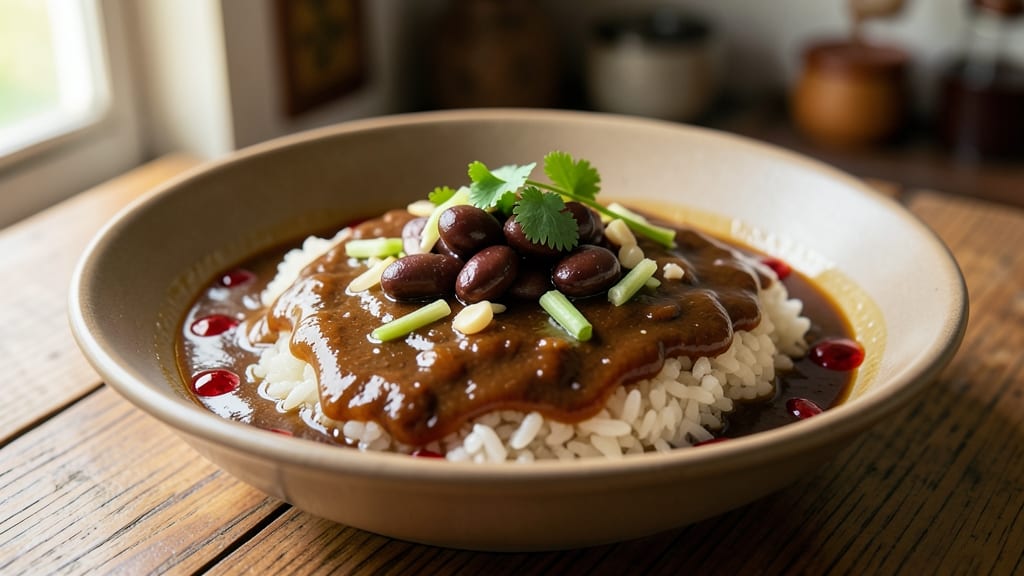
This authentic Chinese black bean sauce transforms ordinary stir-fries into restaurant-quality meals with its deep, savory complexity. The secret lies in fermented black beans (douchi), which develop that signature umami punch when properly prepared.
I've perfected this recipe through years of testing, ensuring every spoonful delivers the bold, salty-sweet balance that defines Cantonese cuisine.
The process begins with soaking and rinsing the black beans to remove excess salt, then simmering them until soft and fragrant. Garlic, ginger, and soy sauce form the flavor base, while optional additions like fermented bean paste or chili paste add depth.
What makes this sauce truly special is the slow reduction that concentrates the flavors into a thick, glossy paste—perfect for tossing with noodles, glazing dumplings, or drizzling over braised pork.
What you'll end up with is a versatile sauce that elevates any dish it touches—think crispy noodles coated in glossy black bean glaze or dumplings bursting with savory filling.
The aroma alone will transport you to a bustling Chinese kitchen, while the taste delivers that unmistakable umami richness that's impossible to replicate with store-bought substitutes.
Best of all, this sauce keeps beautifully in the refrigerator for up to two weeks, making it ideal for meal prep. Whether you're cooking for family gatherings or simply craving authentic Chinese flavors, this recipe delivers professional-quality results with minimal effort. Let's get started on creating your own umami bomb.
Ingredients for authentic chinese black bean sauce
Nine ingredients crafting Cantonese umami depth—no shortcuts, just restaurant-quality flavor.
| Ingredient | Amount | Notes |
|---|---|---|
| Fermented Black Beans (Douchi) 🫘 | ½ cup | Rinsed to reduce saltiness |
| Light Soy Sauce 🍶 | ½ cup | Kikkoman preferred for balance |
| Dark Soy Sauce 🍶 | 1 tbsp | For deep color and sweetness |
| Garlic Cloves 🧄 | 4 cloves | Peeled, minced for even distribution |
| Fresh Ginger 🌿 | 1 tbsp | Finely grated, aromatic |
| Fermented Black Bean Paste (Douchi Zhi) 🫘 | 2 tbsp | Optional for extra umami |
| Chili Paste (La Jiao) 🌶️ | 1 tbsp | Adjust for heat preference |
| Sugar 🍚 | 1 tbsp | Balances saltiness, white preferred |
| Shaoxing Wine 🍷 | 1 tbsp | Or dry sherry substitute |
| Water 💧 | ½ cup | For simmering and reduction |
The fermented black beans (douchi) are the heart of this sauce. Look for them in Asian markets—they should smell funky and salty, not moldy. The fermented black bean paste (douchi zhi) is a game-changer if you can find it, but the beans alone still deliver that signature umami. I always buy my douchi from H Mart—their selection is consistently high quality. For ginger, fresh is non-negotiable—dried loses its aromatic punch. The soy sauces? Kikkoman light and Pearl River Bridge dark are my go-tos, but any quality brands work.
No fermented black beans? Miso paste at half the amount gets you close, though it won't have the exact same funk. Short on Shaoxing wine? Dry sherry or even a splash of rice vinegar works in a pinch. The chili paste can be swapped for Sichuan chili bean paste for extra depth. For the sugar, white granulated is best—brown might add unwanted caramel notes. And if you're feeling adventurous, add a teaspoon of hoisin sauce at the end for extra gloss and sweetness.
This sauce gets better with time—reheat gently in a saucepan until warm through. Keeps for 2 weeks refrigerated in an airtight jar, or 3 months frozen. I always make a double batch: one jar for immediate use, one frozen for lazy weeknights. The texture thickens as it cools, so add a splash of water if it gets too stiff when reheating.
Why You'll Love This Recipe
- No-Chop Necessary: I swear by this—just toss in whole garlic cloves and ginger slices, no peeling or mincing. The sauce simmers down to a sticky, umami bomb while you’re still debating what to eat for dinner.
- Umami Magic: That funky, salty-sweet fermented black bean paste? It’s the star. One spoonful and you’ve got depth—no fancy ingredients, just pure, addictive flavor from the douchi and dark soy’s caramelized punch.
- Pantry-to-Table Power: I keep a jar of this in my fridge for lazy nights. Drizzle it over stir-fries, toss it with noodles, or slather it on grilled fish—it’s the secret weapon that turns basic meals into something special.
- Budget Stretch: A little goes a long way. That jar of douchi lasts forever, and a splash of soy sauce transforms cheap proteins into something restaurant-worthy. Honestly, it’s how I feed my family without breaking the bank.
Step-by-step instructions for authentic Chinese black bean sauce
Here's how to build this umami-rich sauce from scratch—simple steps for bold flavor.
Prepare the Fermented Black Beans
Rinse the 0.5 cup fermented black beans (douchi) thoroughly under cold water to remove excess salt. I find it helps to soak them for 5 minutes first, then drain completely. This reduces bitterness while preserving their deep, funky aroma. The beans should be plump but not mushy after rinsing—if they feel slimy, rinse again until they're clean.
Transfer the drained beans to a small saucepan and cover with 0.5 cup water. Bring to a gentle simmer over medium heat and cook for 10 minutes until the beans soften slightly. You'll notice the water turning cloudy with starch—this releases the beans' natural umami. Keep the beans submerged to prevent burning, and stir occasionally to distribute heat evenly.
Build the Base with Aromatics and Sauces
In a separate small bowl, combine the 2 tablespoons fermented black bean paste (douchi zhi), 1 tablespoon chili paste (la jiao), 1 tablespoon sugar, and 1 tablespoon shaoxing wine. Mix vigorously with a fork until smooth—this paste will form the sauce's rich, complex foundation. The paste should look like a thick, dark brown slurry with visible flecks of fermented bean.
Heat a clean nonstick skillet over medium-low heat and add the minced 4 cloves garlic and 1 tablespoon fresh ginger. Sauté for 1-2 minutes until fragrant but not browned—ginger should lose its raw bite while garlic remains pale. Add the mixed paste to the skillet and cook for 3 minutes, stirring constantly to prevent sticking. This step develops the sauce's depth of flavor through caramelization.
Combine and Simmer to Perfection
Pour the cooked fermented black beans and their soaking liquid into the skillet with the paste mixture. Add 0.5 cup light soy sauce and 1 tablespoon dark soy sauce, then stir well to combine. The sauce should bubble gently—if it's too thick, add 1-2 tablespoons water to help it flow smoothly. Bring to a simmer over medium heat and reduce to the lowest setting possible while maintaining gentle bubbling.
Let the sauce simmer uncovered for 15-20 minutes, stirring occasionally with a wooden spoon. You're looking for a reduction where the liquid thickens to a glossy, syrupy consistency—it should coat the back of a spoon but still be pourable. Taste as you go: the sauce should balance sweet, salty, umami, and subtle heat. If it needs more depth, add another ½ teaspoon fermented black bean paste. For extra brightness, a splash of shaoxing wine works wonders.
Finish and Test for Authenticity
Once the sauce reaches your desired consistency, remove it from heat and let it cool slightly. I like to press a small amount between my fingers—it should feel thick but still spreadable, with a velvety texture. The color should be a deep mahogany with visible specks of fermented bean throughout. If it's too thin, simmer uncovered for another 5 minutes to reduce further.
For the ultimate test, spread a thin layer on a plate and let it sit for 10 minutes. The surface should develop a slight sheen, and the aroma should be complex—earthy from the fermented beans, slightly sweet from the soy and sugar, with a lingering warmth from the chili. This sauce is now ready to elevate any stir-fry, dumpling filling, or braised dish with its authentic Chinese depth.
Pro Tips For Making Authentic Chinese Black Bean Sauce
- Bloom the Douchi First: Toss the fermented black beans in a dry pan for 30 seconds before adding liquid—this releases their funky aroma and prevents a muddy sauce. I used to skip this, and the flavor always felt buried under the soy.
- Use Dark Soy Sparingly: Start with half the dark soy sauce called for, then add more later if needed—it’s easy to overdo and turn the sauce inky black. The goal is depth, not a color wash.
- Mince Ginger Like You Mean It: No, a microplane isn’t cheating—it gets the ginger finely enough to dissolve into the sauce instead of sitting as chunks. I tried grating it once; the texture was all wrong.
- Simmer Low and Slow: Let the sauce bubble gently for 10-12 minutes, not a fast boil—this lets the flavors meld without burning the garlic or turning the ginger bitter. Rushing this step is how you end up with a harsh, one-note sauce.
Troubleshooting this dish
Over-Salty Sauce
If your sauce tastes too salty, it’s likely from the fermented black beans or soy sauces. I’ve found that rinsing the douchi for 10-15 minutes before cooking removes excess salt without losing flavor.
For extra insurance, reduce the light soy sauce to 0.3 cups and taste as you go—you can always add a pinch of sugar to balance. If the beans are especially salty, substitute ½ cup water for ¼ cup soy sauce in the simmering step. 💡
Too Thin or Watery
If your sauce isn’t thickening properly, it’s probably because the simmer time wasn’t long enough. After the initial 15-20 minutes, let it reduce uncovered on low heat for another 10-15 minutes, stirring occasionally.
For a quicker fix, mix 1 tablespoon cornstarch with 1 tablespoon cold water, then stir it into the sauce while simmering until it thickens. Avoid high heat—it can burn the aromatics and make the sauce bitter. 🌡️
Mushy or Slimy Texture
Overcooking the fermented black beans can turn them mushy, which ruins the sauce’s texture. Once they’re plump but still firm (around 10 minutes of simmering), remove them immediately. If they’re already too soft, drain them well and blend the sauce with 1-2 tablespoons of the soaking liquid to restore body.
For extra thickness, mash a few beans with a fork to release starch naturally. 🫘
Lacking Umami Depth
The sauce might taste flat if the fermented beans weren’t properly prepared or if the aromatics weren’t cooked long enough. Boost umami by adding 1 teaspoon fish sauce (traditional) or ½ teaspoon miso paste (vegetarian).
For a deeper flavor, simmer the sauce with the garlic and ginger for 5 extra minutes to caramelize them further. If using store-bought douchi, opt for aged varieties—they pack more funk and complexity. ✨
Burnt or Bitter Taste
High heat or prolonged cooking can turn the sauce bitter. Always cook on medium-low heat and stir frequently to prevent burning. If the sauce tastes off, start fresh by reducing it with ½ cup water and 1 tablespoon Shaoxing wine, then simmering for 10 minutes to mellow the flavors.
A splash of rice vinegar can also help cut through bitterness. 🔥
Separation or Oily Layer
If the sauce separates or develops an oily layer, it’s likely from the fermented beans releasing too much fat. To fix this, blend the sauce until smooth, then return it to low heat for 5 minutes to re-emulsify.
For prevention, strain the cooked beans through a fine-mesh sieve before adding them to the sauce. If the oil persists, chill the sauce overnight—the fat will solidify on top and can be skimmed off before using. ❄️
Nutrition facts
Frequently asked questions
What's the secret to getting that authentic fermented black bean aroma?
Use high-quality fermented black beans (douchi) from Asian markets—they should smell funky but not moldy. Soak them for 5 minutes before cooking to reduce saltiness while keeping their deep umami. The longer they ferment naturally, the more complex the flavor becomes.
Can I make this sauce without fermented black beans?
Yes! Substitute with ½ cup miso paste for umami, though it won't have the exact same funk. For color and texture, add 1 tablespoon soy sauce and ½ teaspoon smoked paprika. The flavor will be milder but still delicious.
How should I store and reheat this sauce?
Keep in an airtight container in the fridge for 2 weeks or freeze for 3 months. Reheat gently in a saucepan over low heat with 1 tablespoon water to restore thickness. Never microwave—it breaks down the sauce's delicate texture.
What are the best dishes to use this sauce with?
This sauce shines on stir-fried noodles, as a glaze for dumplings, or drizzled over braised pork. It also works as a marinade for tofu or chicken. The key is to use it sparingly—just 1-2 teaspoons per serving to enhance, not overpower.
Why does my sauce look different from the picture?
Authentic black bean sauce varies by region. Cantonese versions are darker from dark soy sauce, while Sichuan versions may include chili oil. The texture should be glossy but still pourable—if it's too thick, thin with 1 teaspoon water.